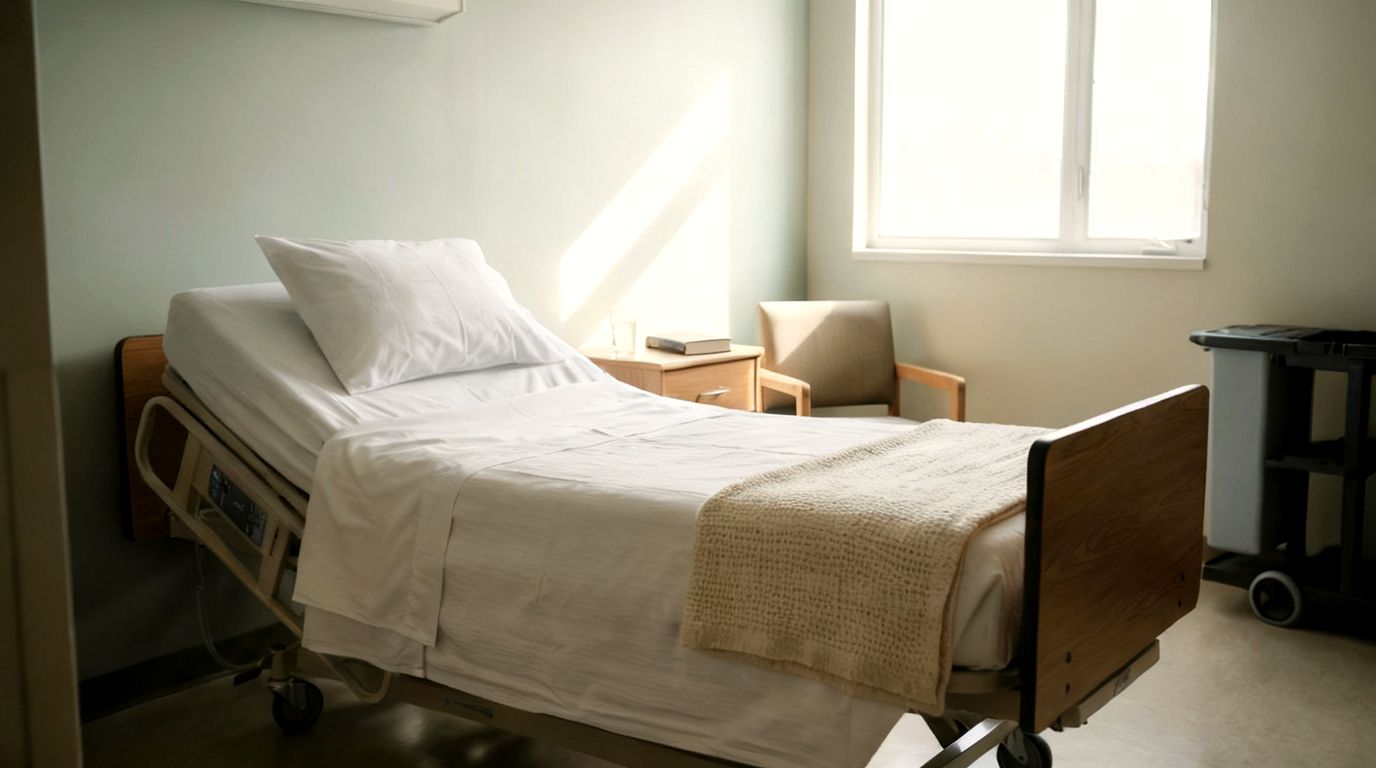
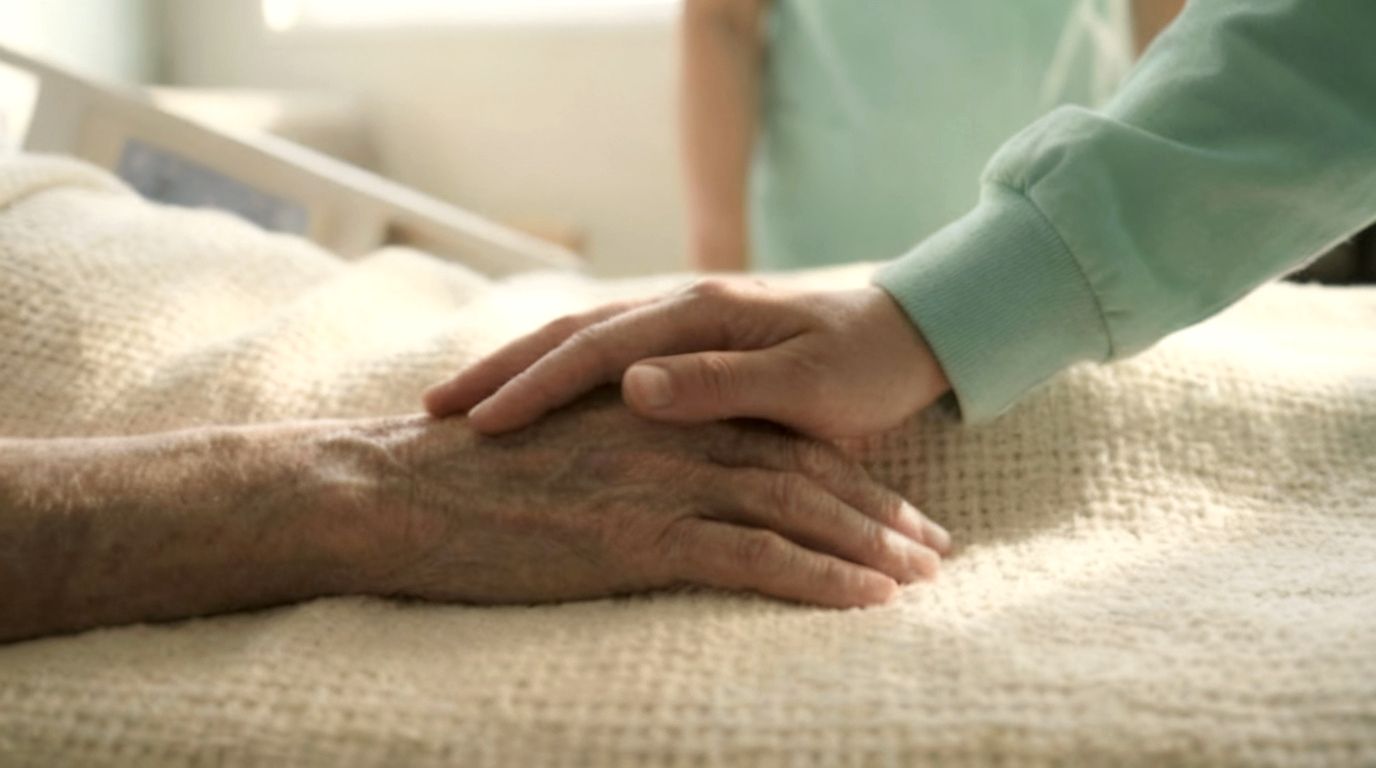
We spent several days visiting two long-term care facilities and documenting bedside bathing. Supplies had no consistent arrangement, clean and used water lacked separate storage, and the existing carts were difficult to move through narrow aisles between beds. Those observations focused our design work on storage and layout.我們花了幾天探訪兩間長照機構,記錄床邊擦澡的流程。現場的備品收納較隨意,清水與污水缺少各自的收納空間,工具車也不易穿過病床間的狹窄走道。這些觀察讓我們把重點放在推車的收納與配置。
User Research · Industrial Design · 2014使用者研究 · 工業設計 · 2014
Field-tested實地測試
Wash Enjoy 洗·樂洗·樂
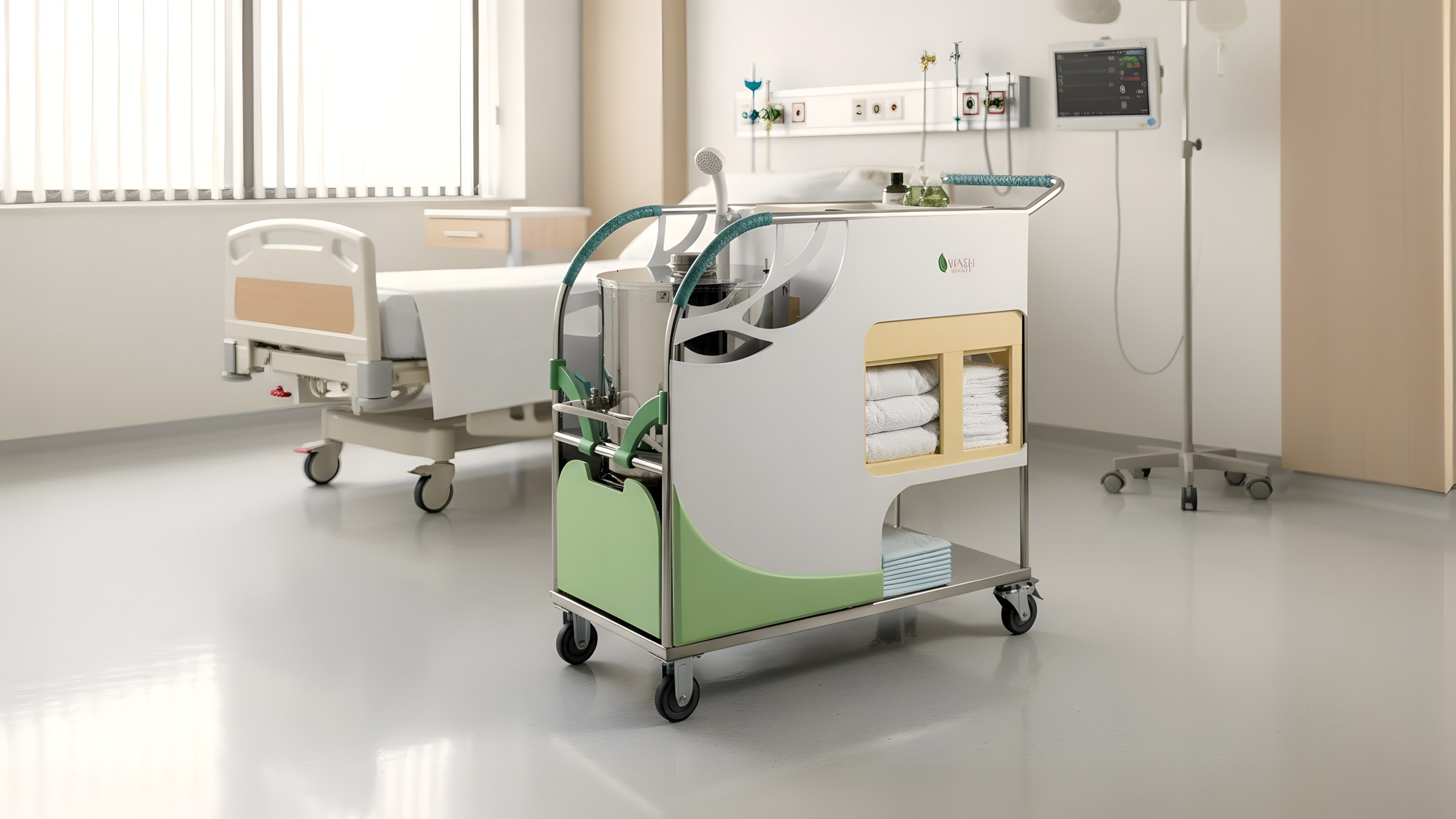
A bath-assistance cart for care workers washing people who cannot get out of bed: older residents, people with disabilities, patients recovering from surgery. Our final-year project at TUT began with what the care homes needed from a bedside bath.台南應用科大畢業設計。為照服員設計的擦澡輔助推車,協助他們替長者、身障者與術後病人完成床邊擦澡。團隊從長照機構的現場觀察出發,探索床邊擦澡的通用設計。
My role角色
Team lead of four, driving the cart’s visual design and the schedule.擔任四人團隊組長,主導車體視覺設計與時程管理。
Methods方法
A field study of the ward, then a stainless frame with ABS panels for the prototype.透過田野調查了解照護流程,再以不鏽鋼車架搭配 ABS 面板製作原型。
Outcome結果
A working prototype, trialed at the care home and shown at the graduation exhibition.完成可操作原型,送回照護機構試用,並於畢業展展出。
01 · Field01 · 田野
Field research before design設計前的場域研究
02 · Storyboard02 · 分鏡
Working it out on a storyboard透過故事板發想
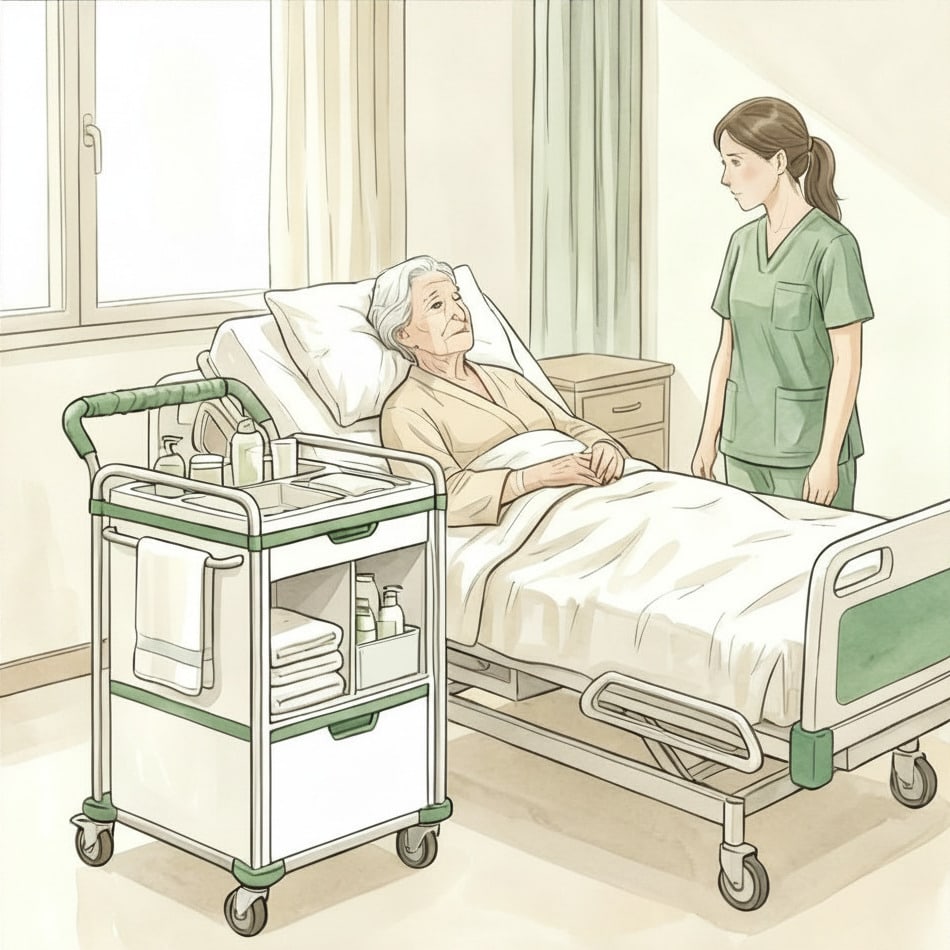
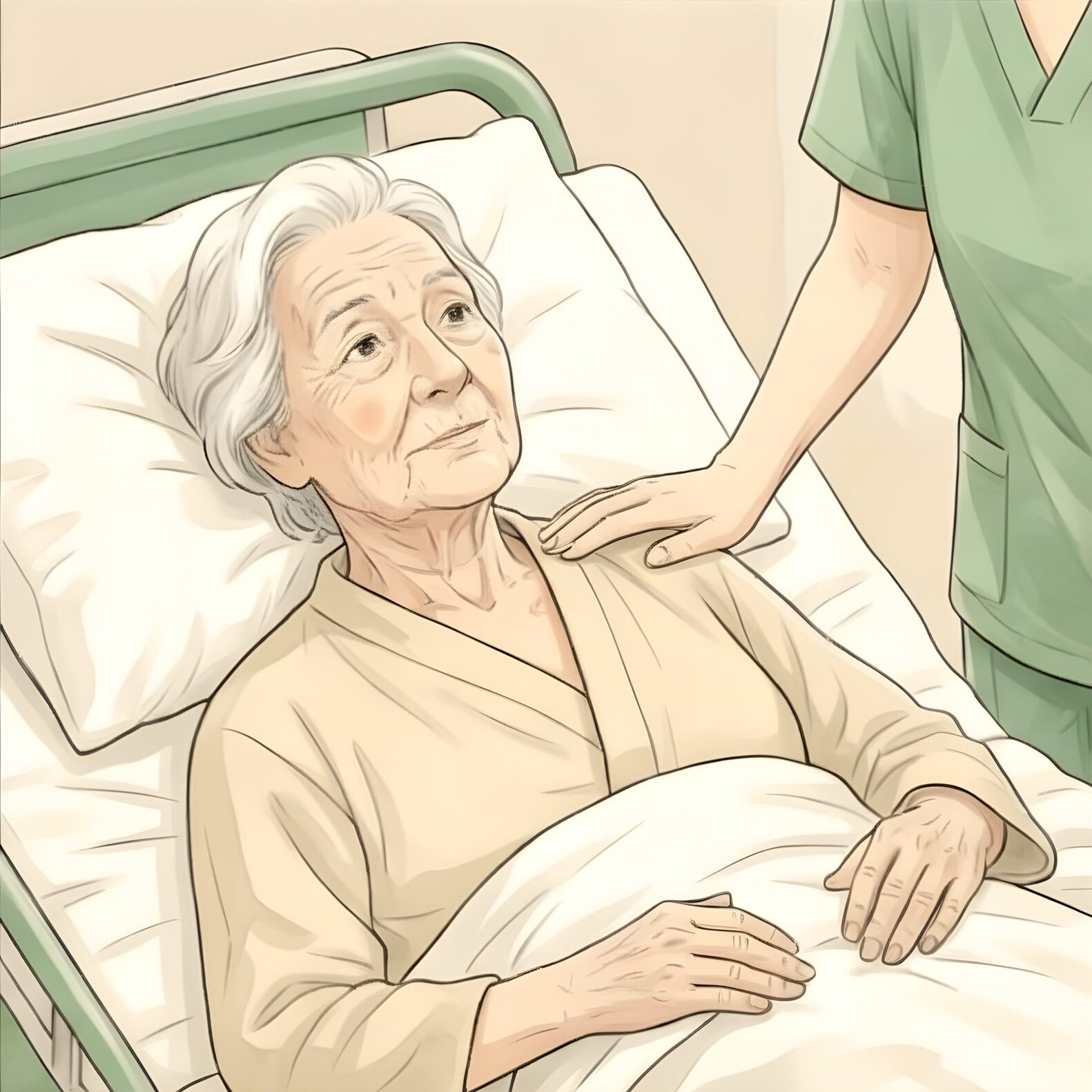
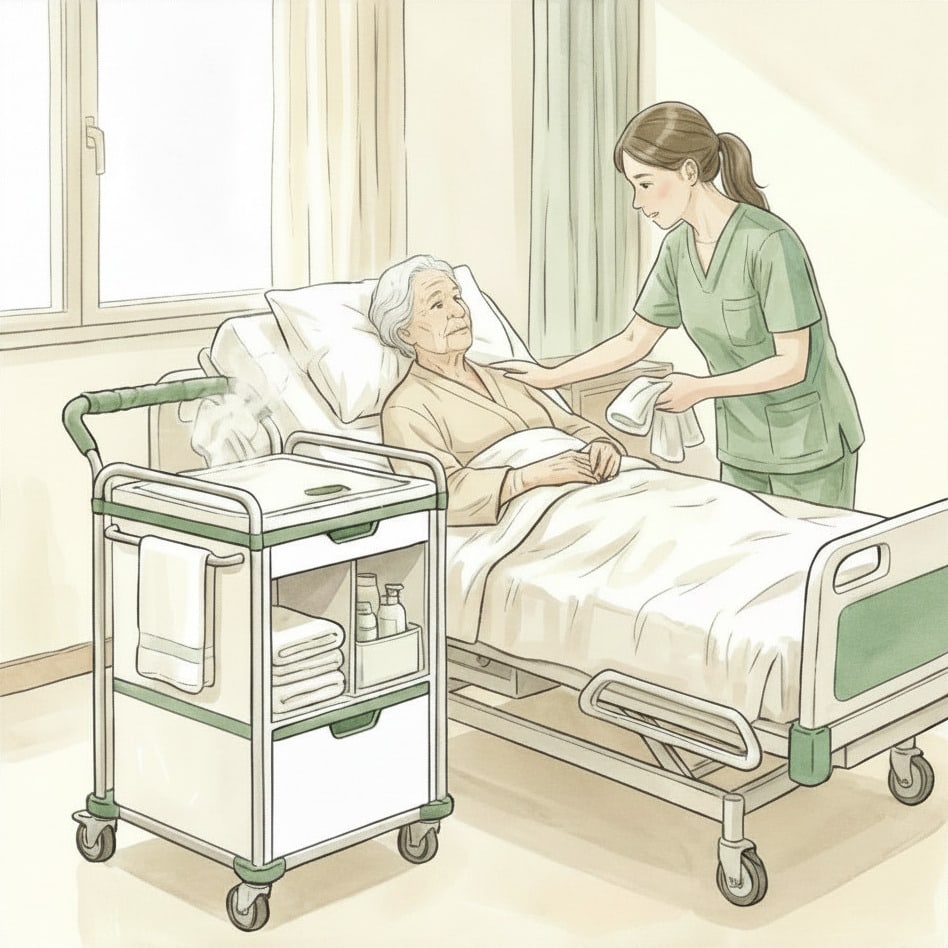
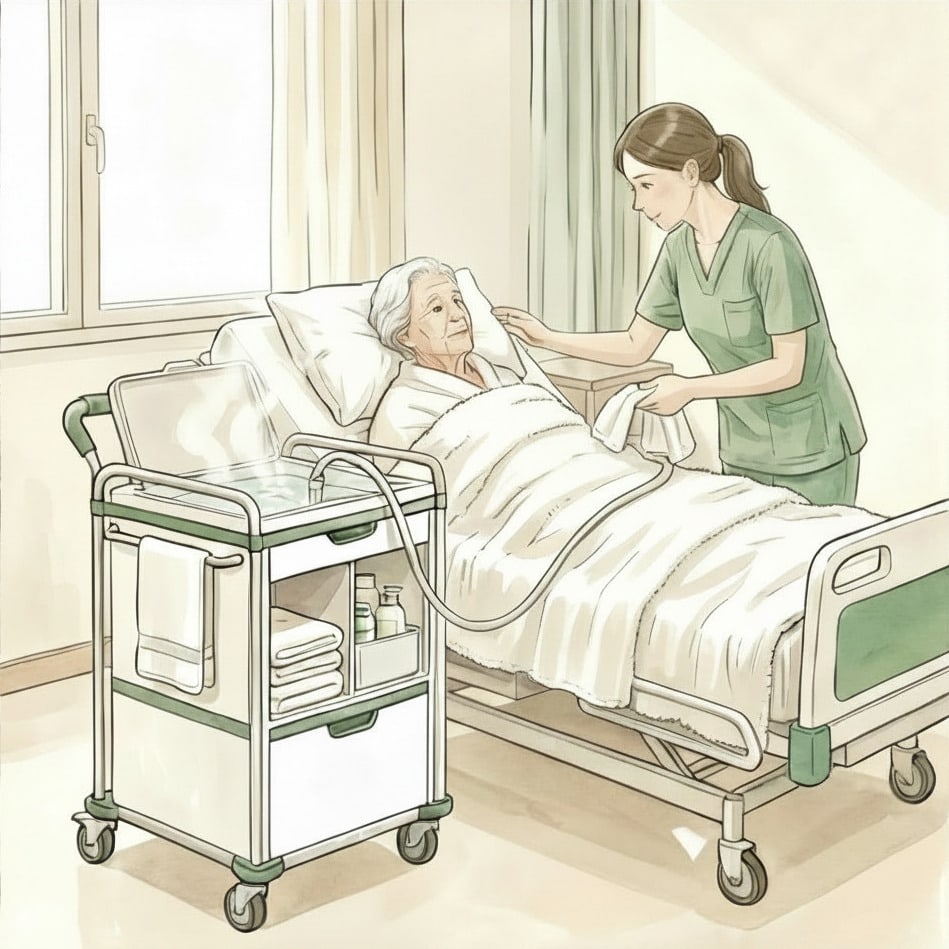
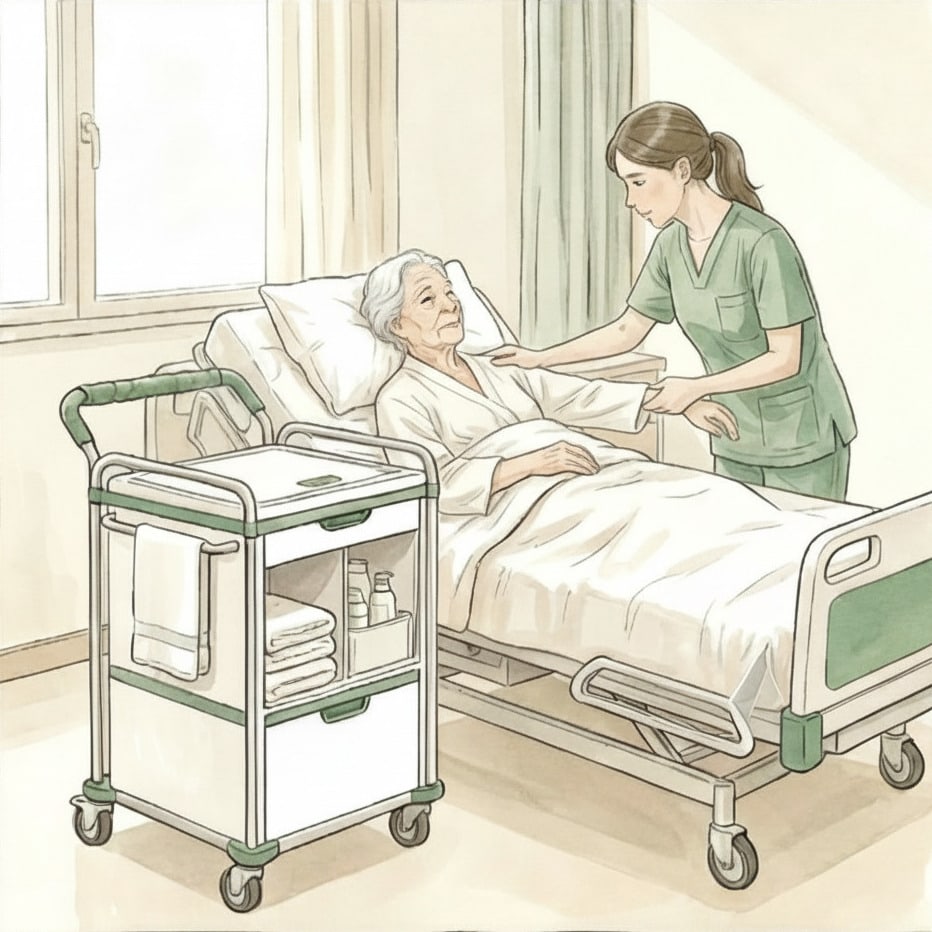
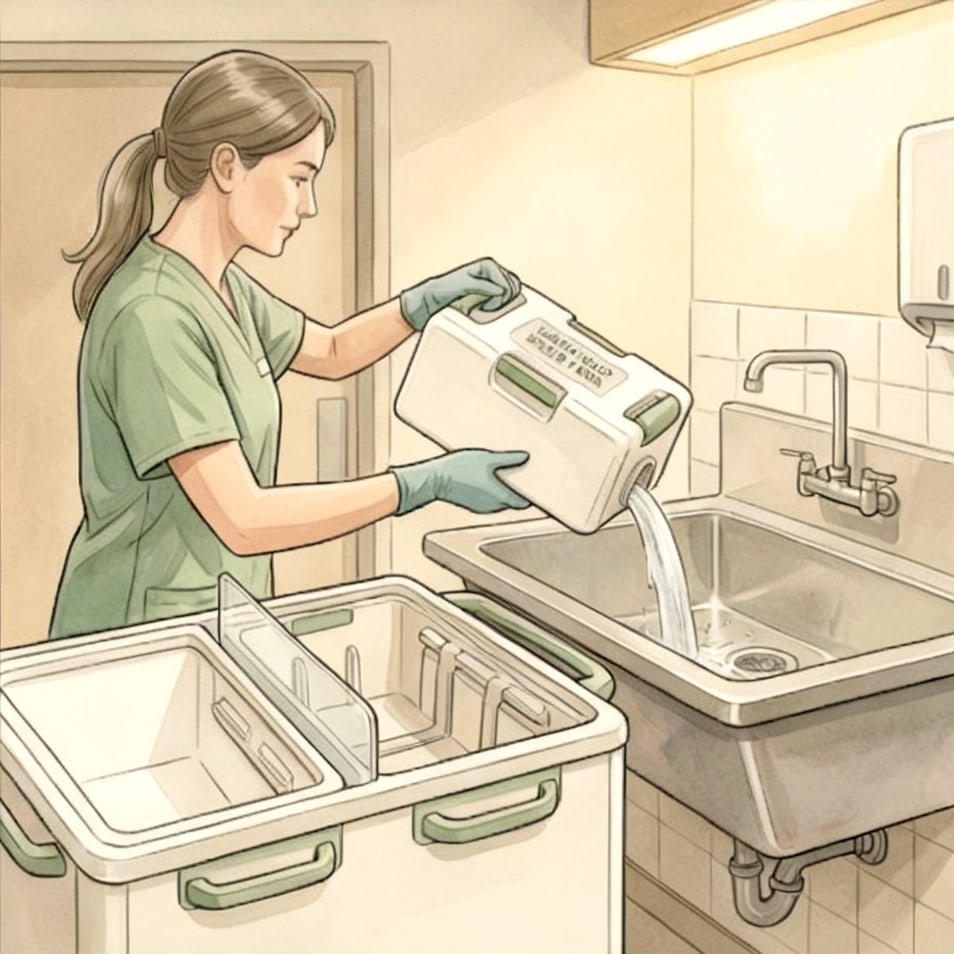
We drew the whole bedside bathing process as a storyboard, and used it to list what the cart had to do.我們將床邊擦澡的完整流程繪製成故事板,藉此盤點推車的基本功能需求。
03 · Concept03 · 概念
The structure started as sketches由草圖定義架構
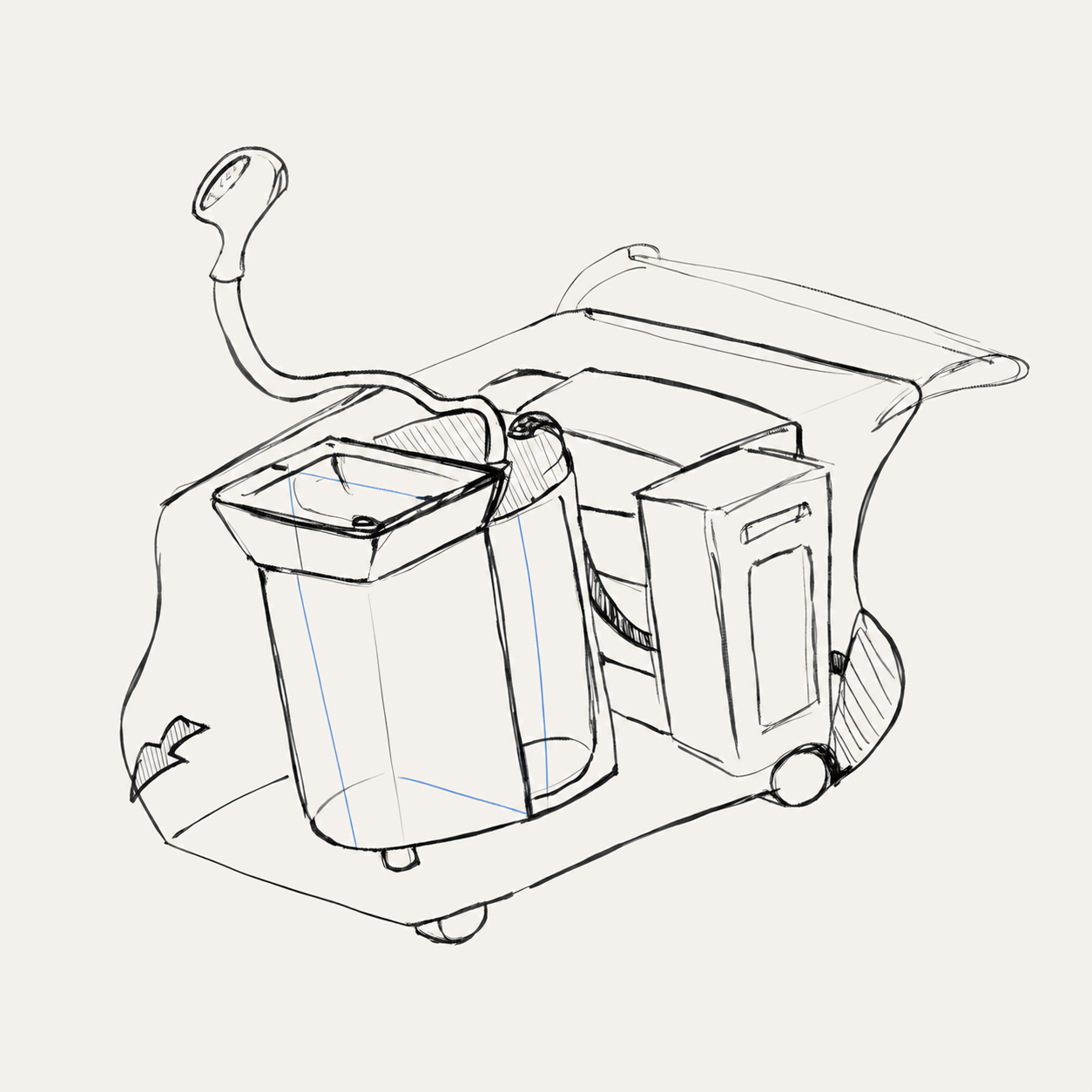
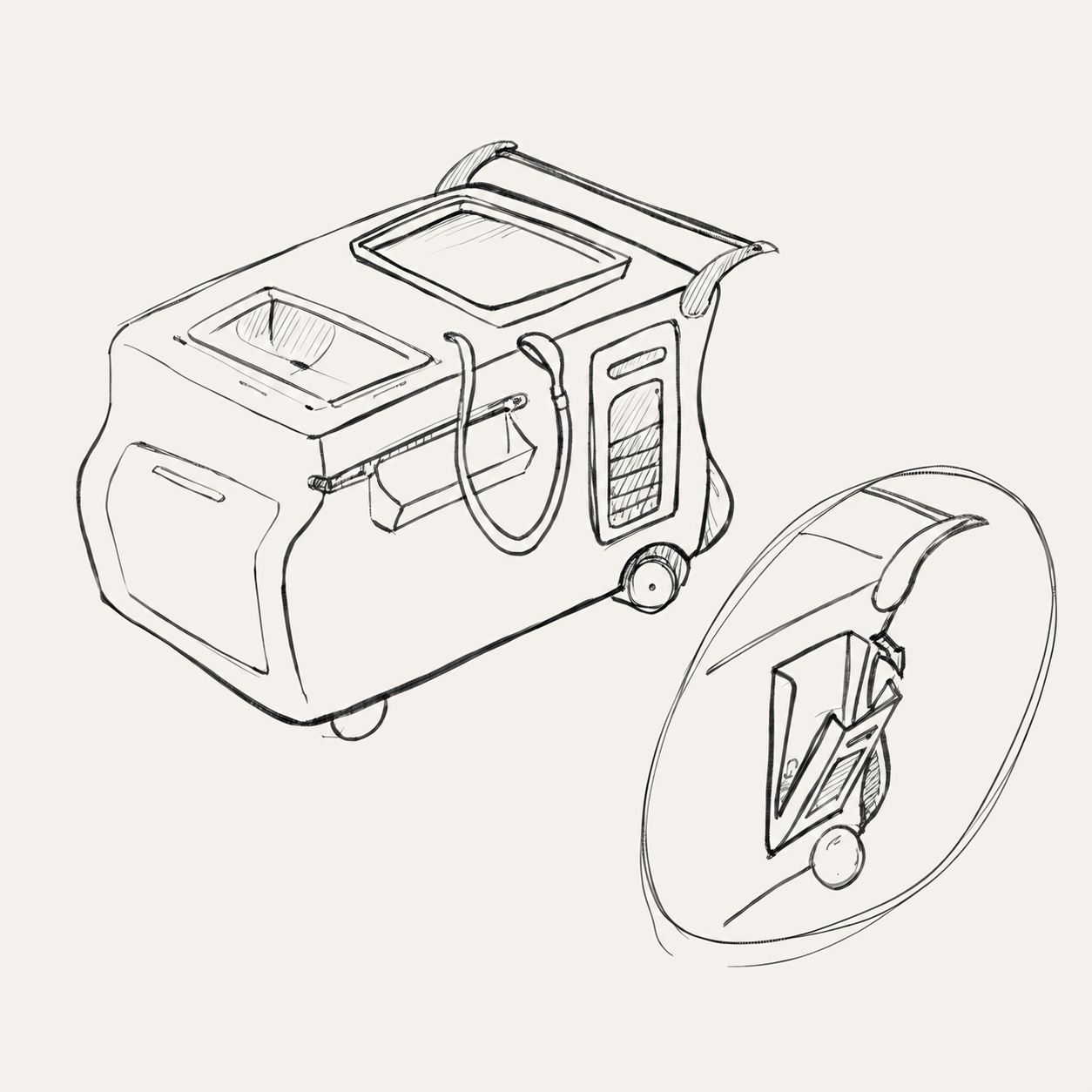
We sketched the tank, piping, and collection-bin layout before developing the exterior. Those mechanical arrangements set the conditions the form had to work within.我們先以草圖安排水箱、管路與回收箱,再依這些機構條件發展外觀。造型必須配合既定配置,不能各自獨立處理。
04 · Modeling04 · 建模演進
From sketch to 3D model由架構發展 3D 模型
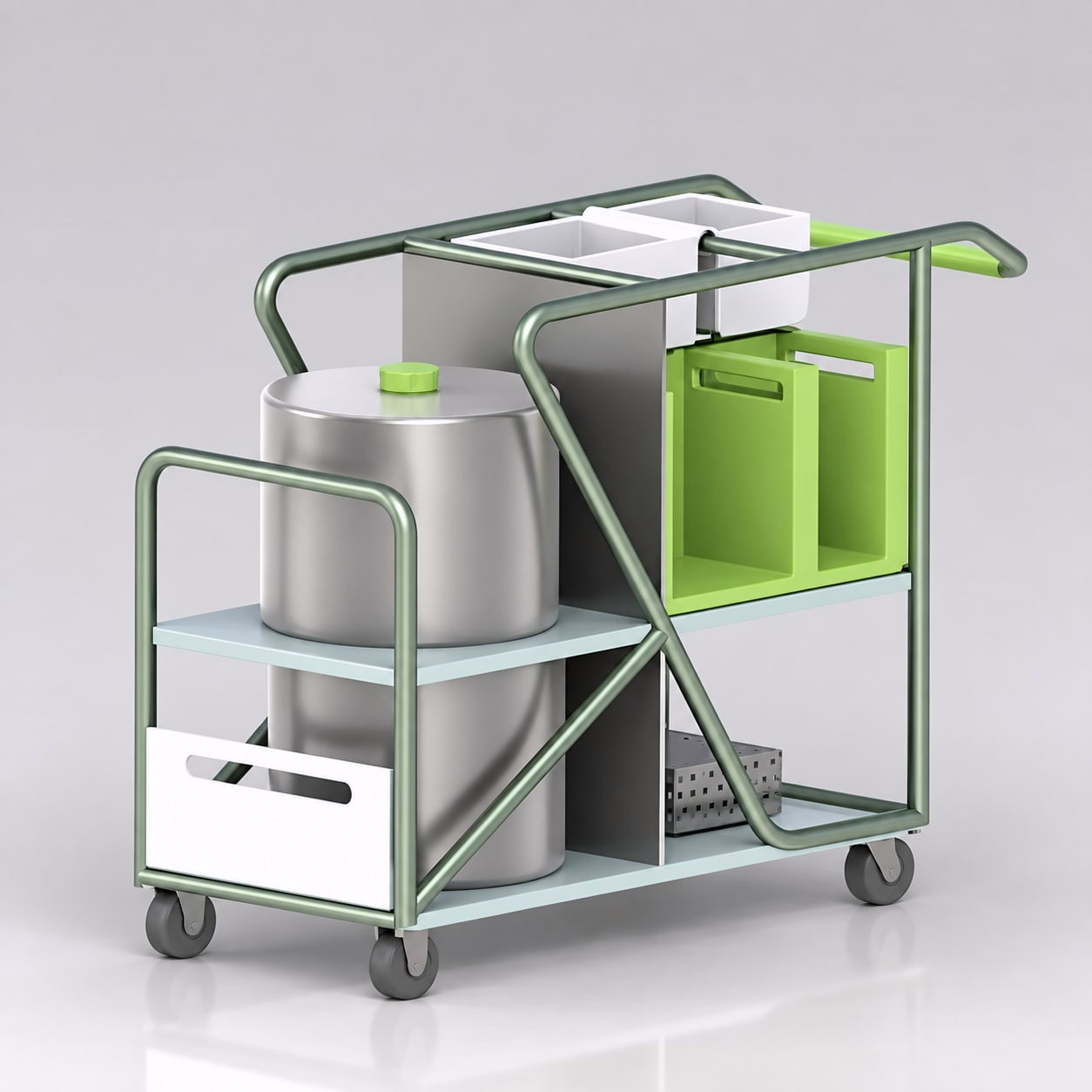
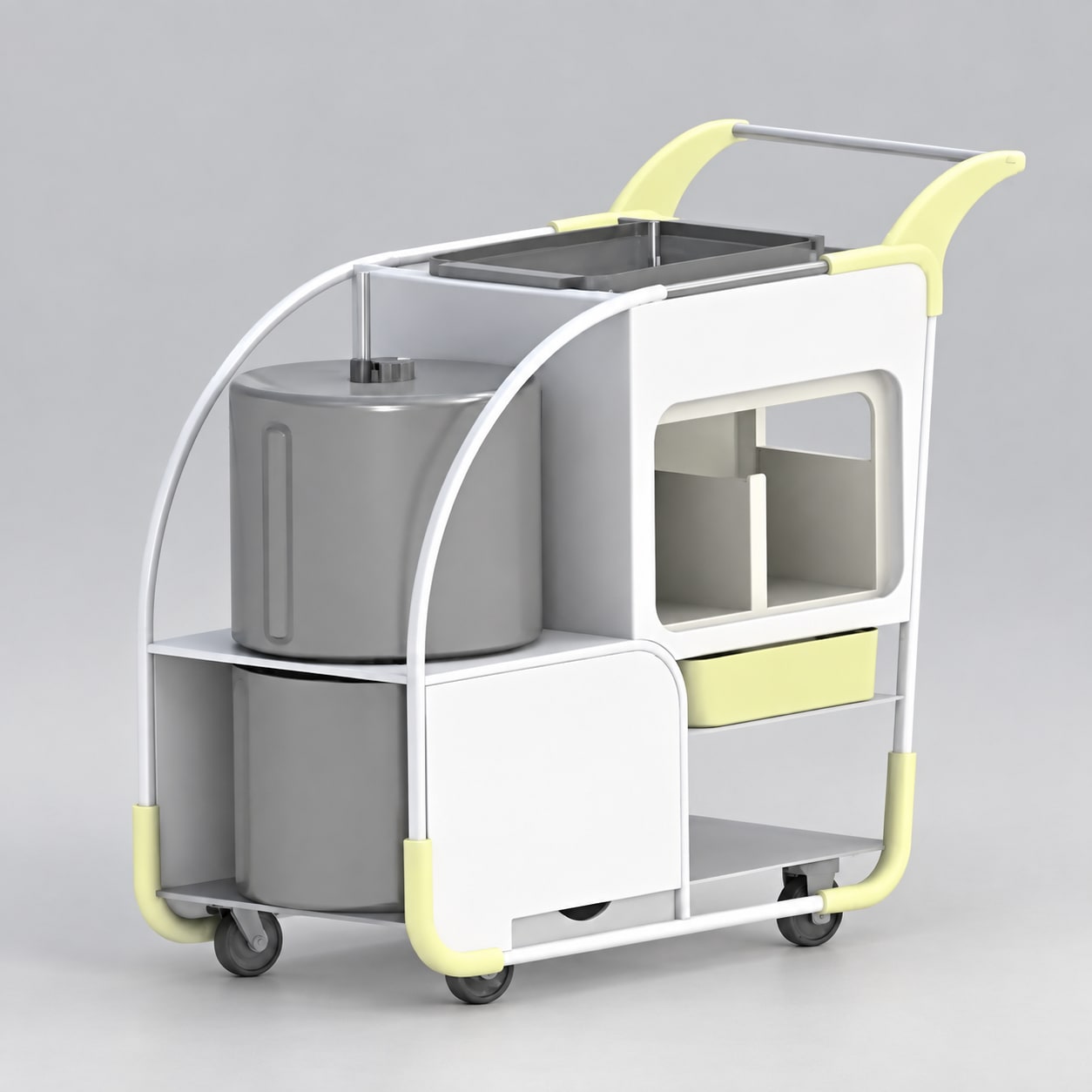
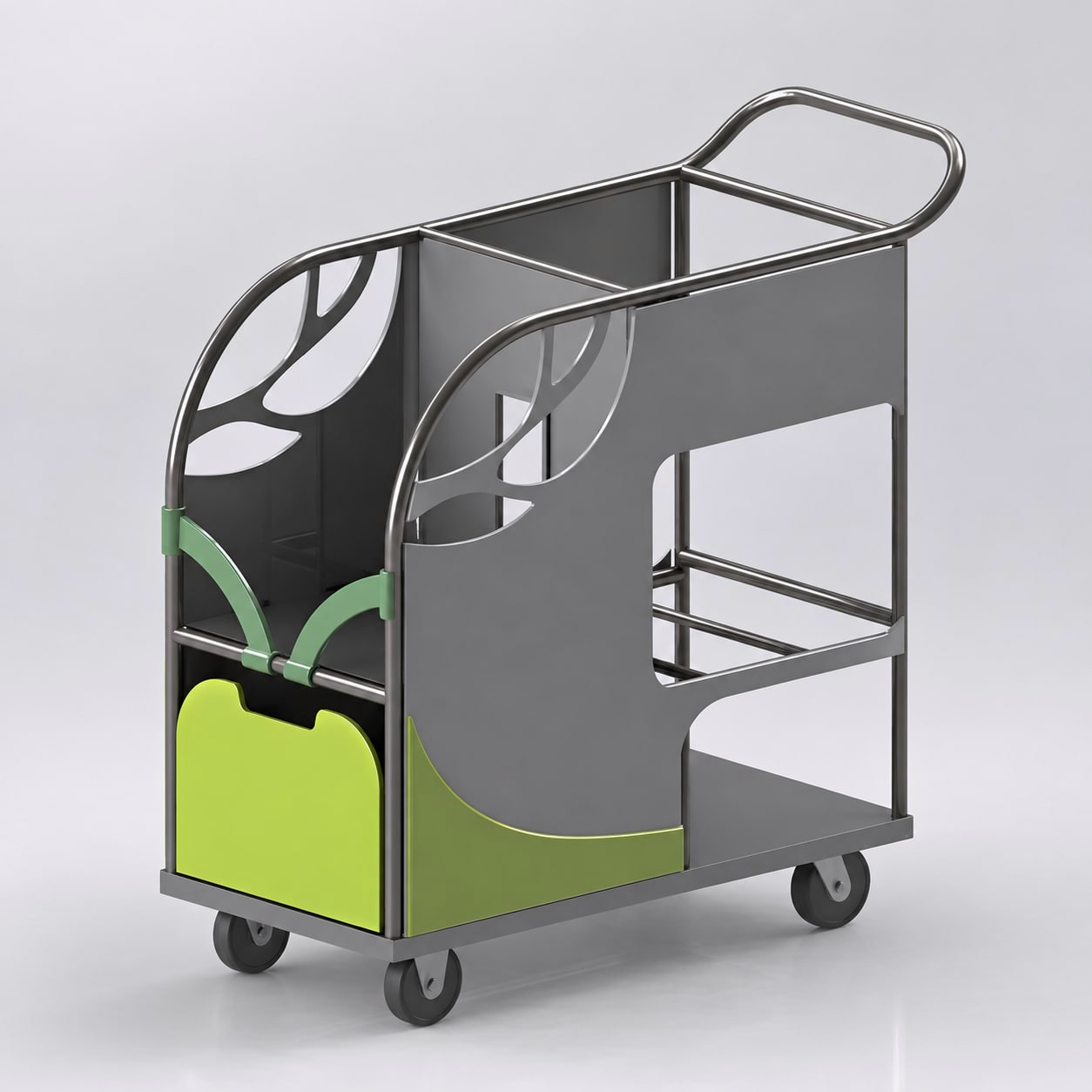
With the mechanical layout agreed, each team member developed a 3D form proposal. The team selected mine in an internal review, and I continued developing the details.機構配置確認後,每位組員各自提出一套 3D 造型方案。經團隊評圖,我的提案獲選,接著進入細節發展。
05 · Build05 · 製造
Welding, test fitting, painting焊接、合裝與上漆
A metalworking shop welded the stainless-steel frame, a CNC prototype shop machined the ABS panels, and we assembled the parts ourselves. Fitting the panels exposed insufficient clearance, dimensional tolerances, and cracks around mounting points where the material was too thin. We worked through repeated checks and adjustments with the vendors before completing the assembly.不鏽鋼管車架由鐵工廠焊接,ABS 面板由 CNC 樣品廠加工,再由我們組裝。逐片鎖上面板時,間隙不足、尺寸公差與薄壁鎖點龜裂等問題才一一出現。我們反覆與廠商確認、調整,才完成合裝。
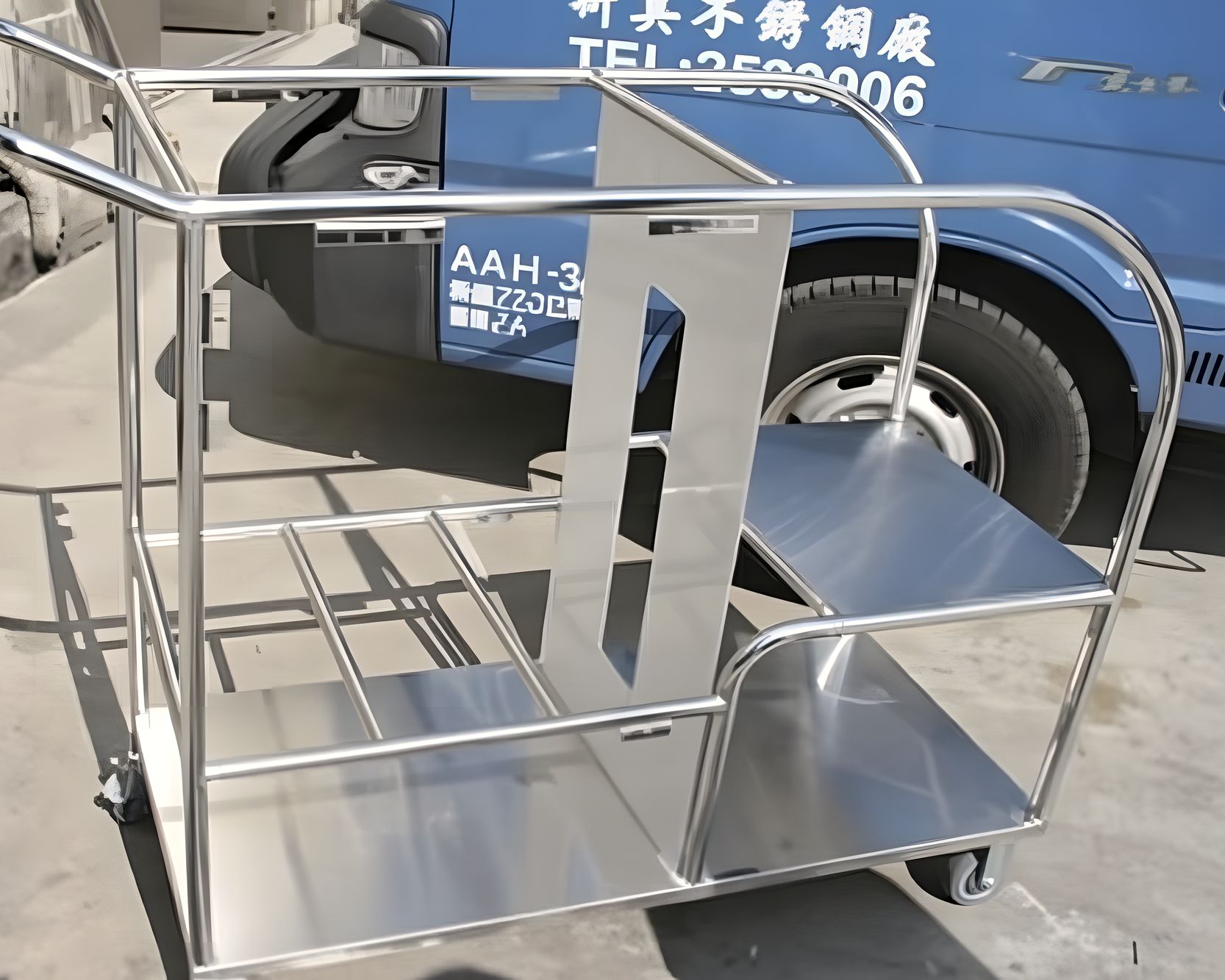
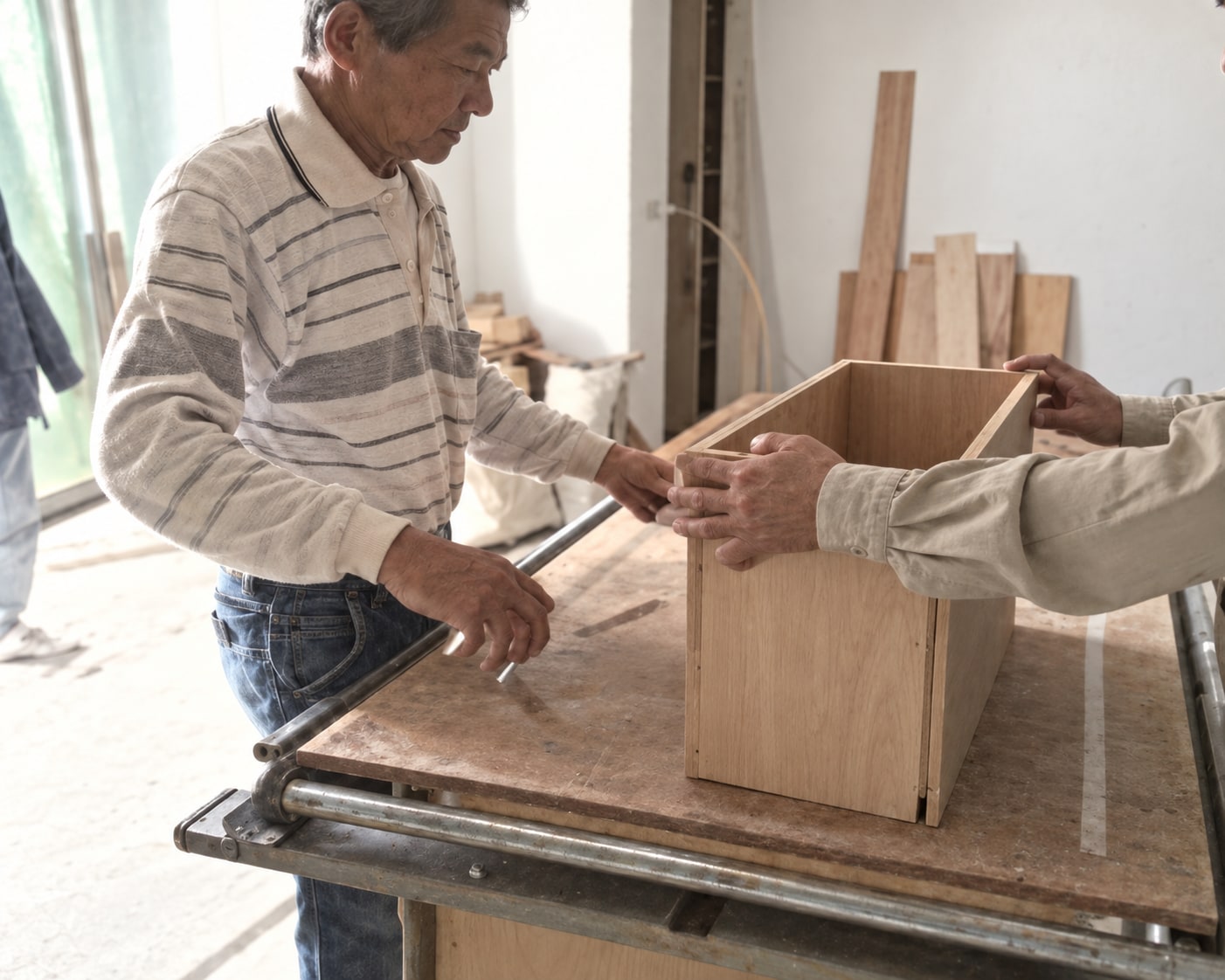
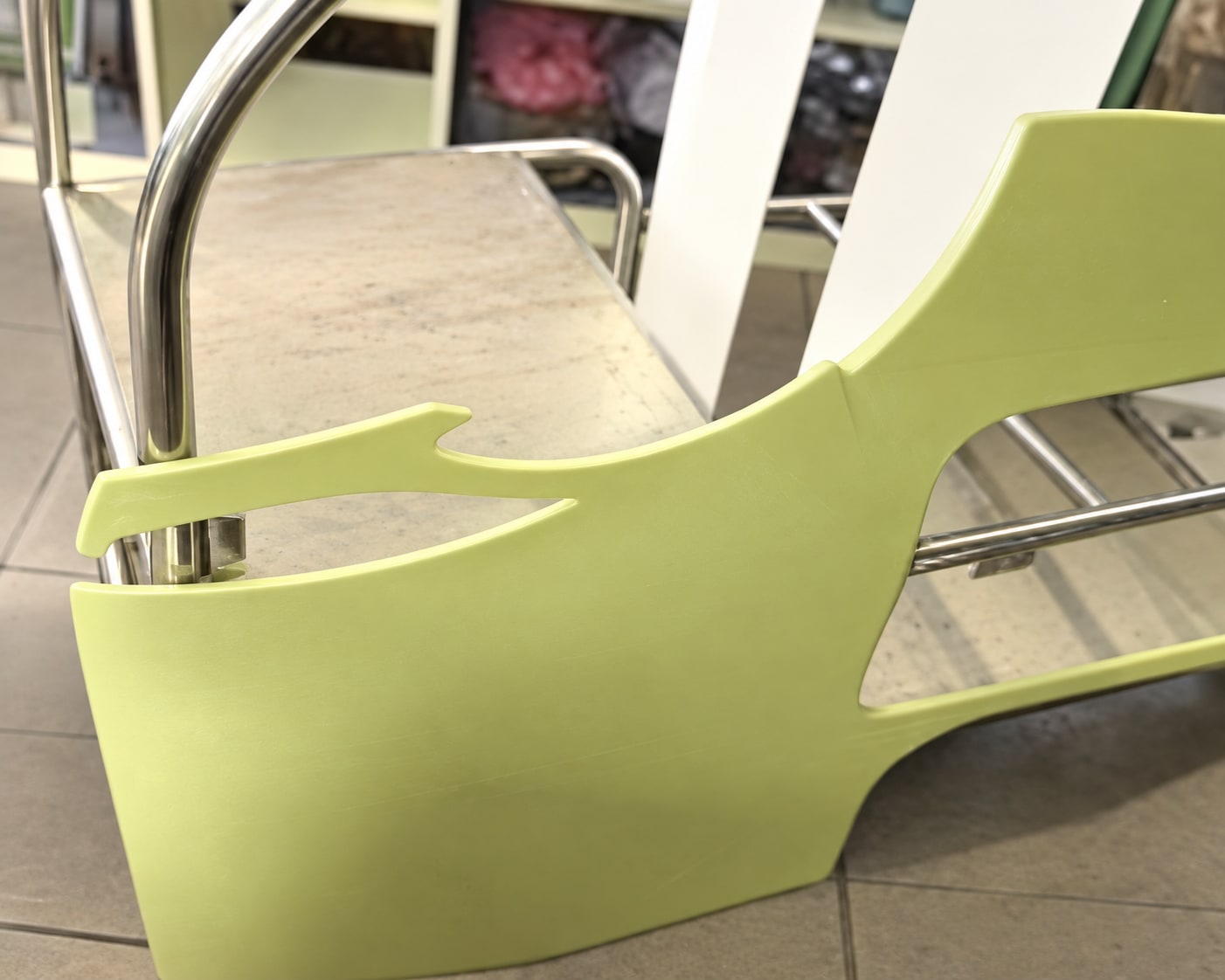
Center and right: AI reconstructions of the original workshop photographs.Right: AI reconstruction of the original workshop photograph.中、右圖依原始製作照片,以 AI 重建畫質。
06 · Finished06 · 完成
The cart in the studio攝影棚內的推車
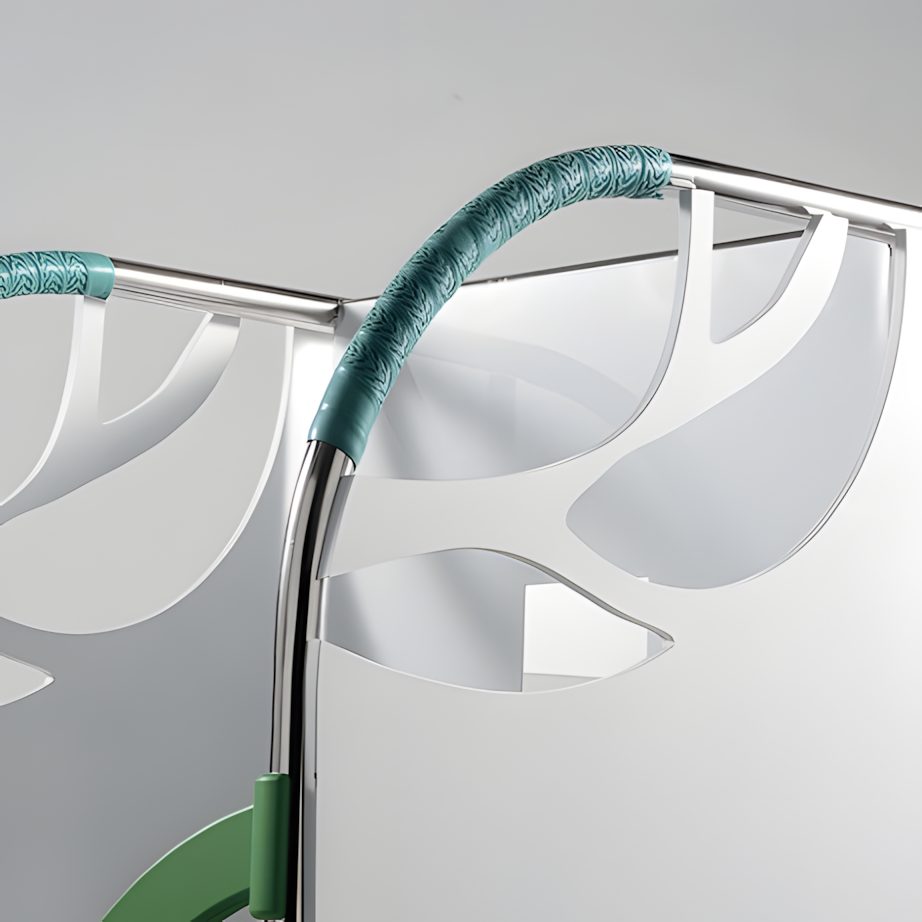
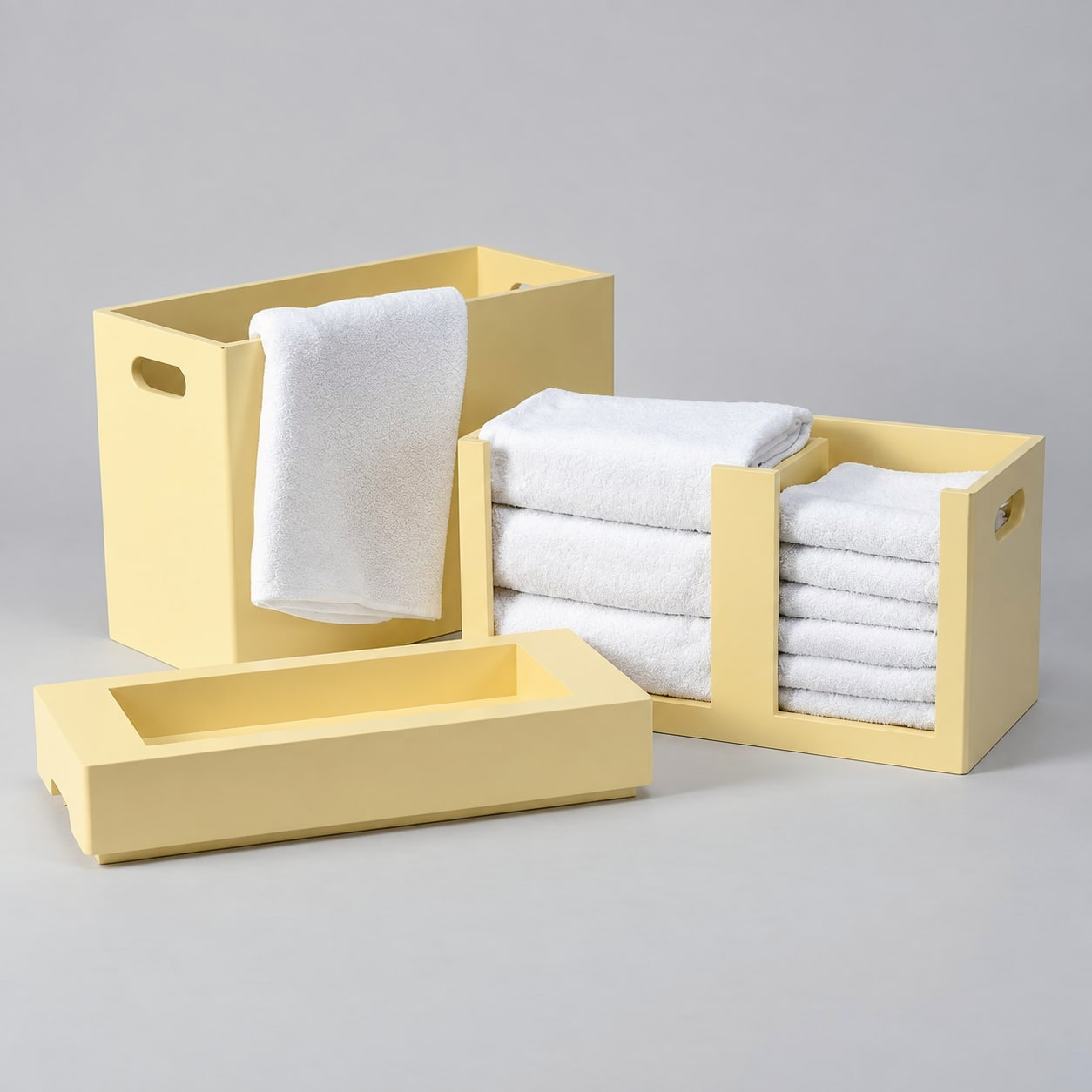
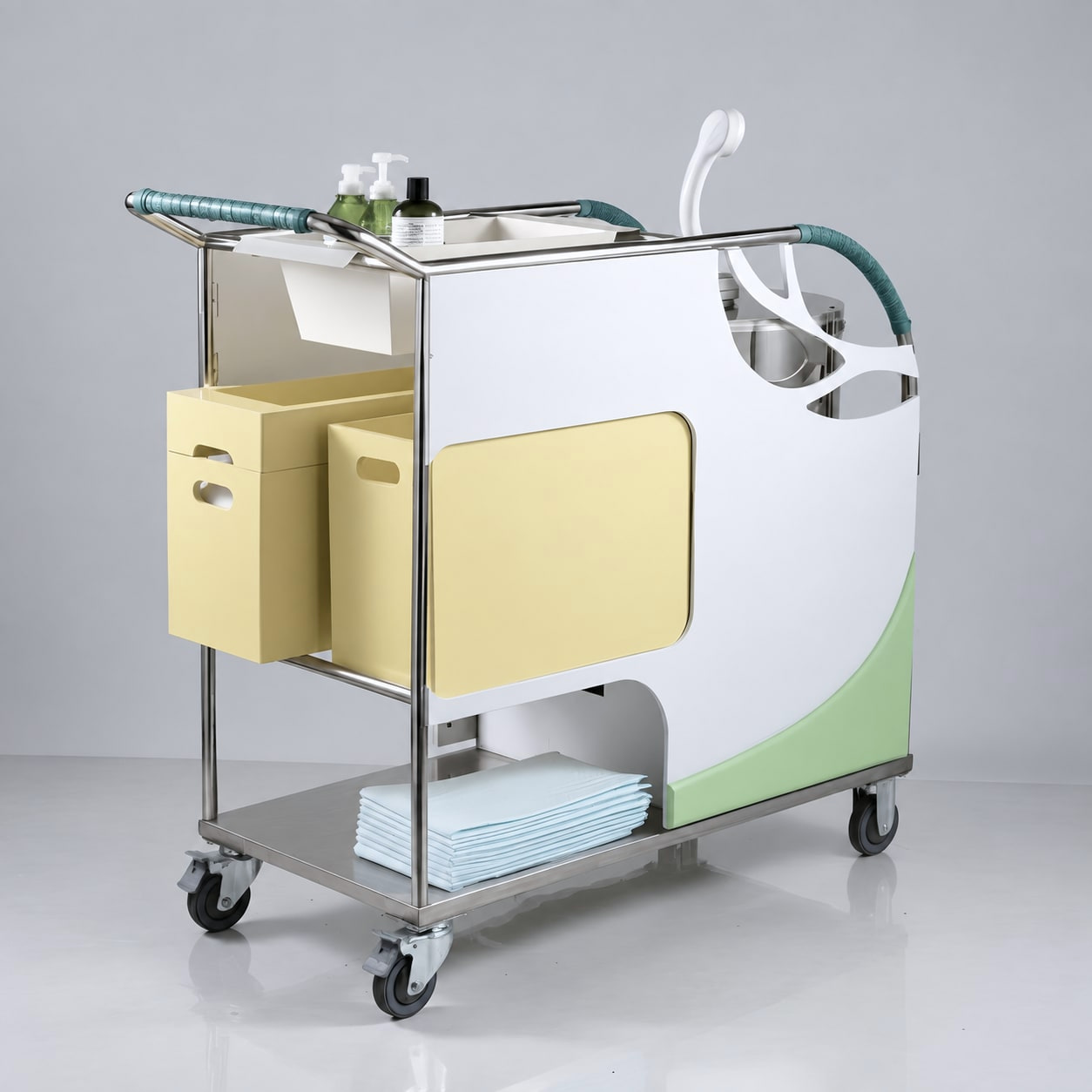
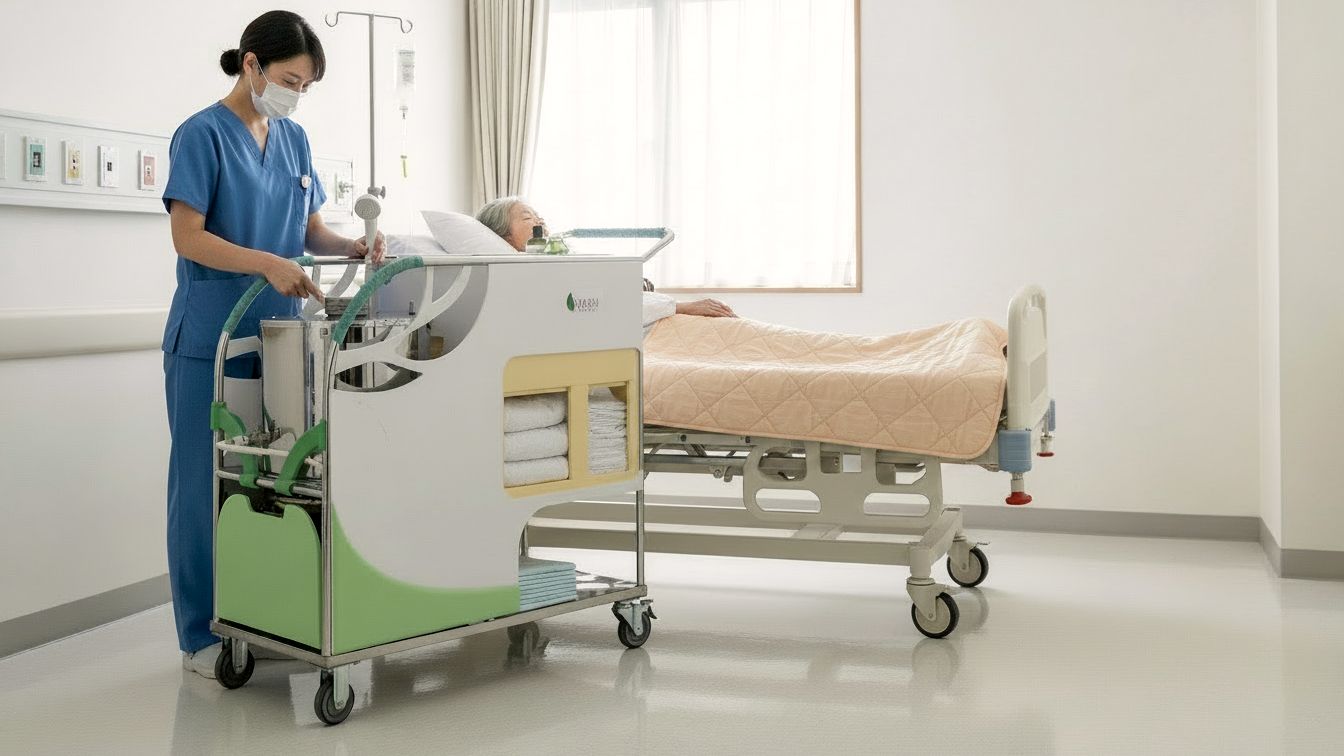
The finished prototype combines a stainless-steel tube frame with ABS panels. Green braid improves the feel of the handle, yellow bins hold towels, and leaf-shaped cutouts give the exterior its character.最終原型由不鏽鋼管車架與 ABS 面板構成。把手處纏繞綠色編織帶以提升抓握手感,黃色收納箱專門用來放毛巾,外觀則融入葉片形鏤空作為視覺特徵。
07 · In Use07 · 使用中
Back where it started回到起點
We took the assembled cart back to the care home for care workers to try, so we could observe how it worked in practice.我們把組裝完成的推車送回照護機構,請照服員試用,觀察實際操作的情況。
08 · Reflection08 · 回顧
What the drawings could not resolve圖面之外的製造限制
I worked on this project with 廖沛怡, 蘇玟佩, and 劉珽暄. Manufacturing showed us that a radius we could draw might not be machinable with CNC, while bending and welding the frame introduced cumulative tolerances. Solving the assembly problems meant revisiting how the parts were made.這件作品由廖沛怡、蘇玟佩、劉珽暄與我共同完成。製造過程讓我們發現圖面上畫得出的圓角未必能用 CNC 加工,金屬彎管與焊接也會累積公差。前面提到的合裝問題需要連同加工方式一起檢視。
We returned the finished cart to the care facility for a trial and showed it at our graduation exhibition. The project ended there. It was my first time leading a team through design and physical fabrication, and my first direct encounter with how tolerances and machining constraints can reshape a design during assembly.推車完成後送回照護機構試用,也在畢業展展出。專案此後告一段落。這是我第一次帶領團隊走完產品設計與實體製作,也第一次在組裝時面對公差與加工限制對原先設計的影響。