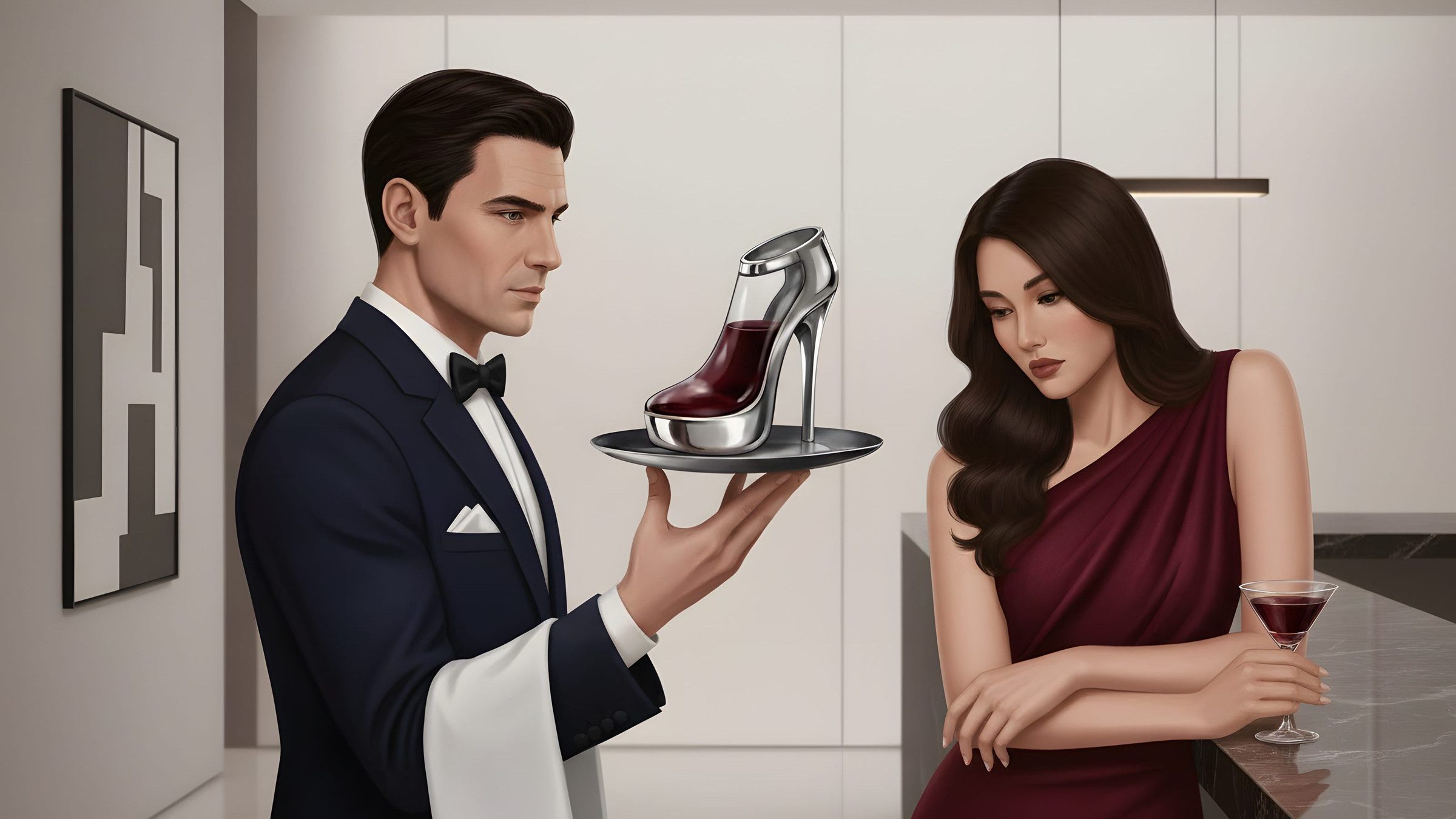
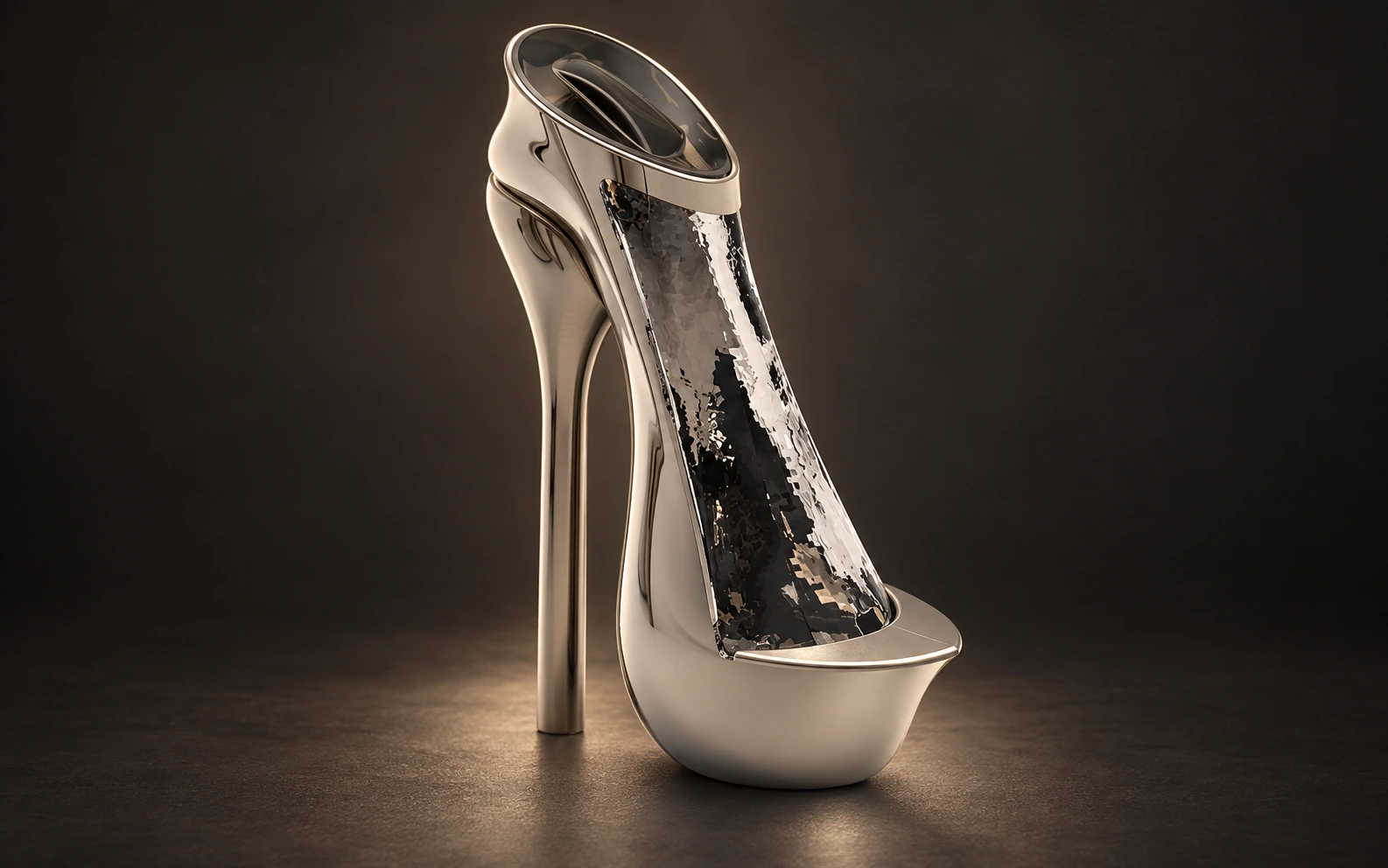
The idea started with Piazzolla’s Le Grand Tango. The rhythm and the tension in that music are what pushed me toward a high-heeled shoe as the outline of the decanter. The platform becomes a steady base. The thin heel becomes the handle you pour with. The upper rises to hold the wine.發想初期,皮亞佐拉的名曲〈Le Grand Tango〉給了我靈感。探戈的節奏與張力促使我選擇「高跟鞋」作為醒酒器的輪廓。鞋台化為穩固的底座,細長的鞋跟作為倒酒把手,鞋面則向上延伸成為盛裝酒液的主容器。
Industrial Design · 2013工業設計 · 2013
Concept概念
Midnight Hour 午夜時分午夜時分
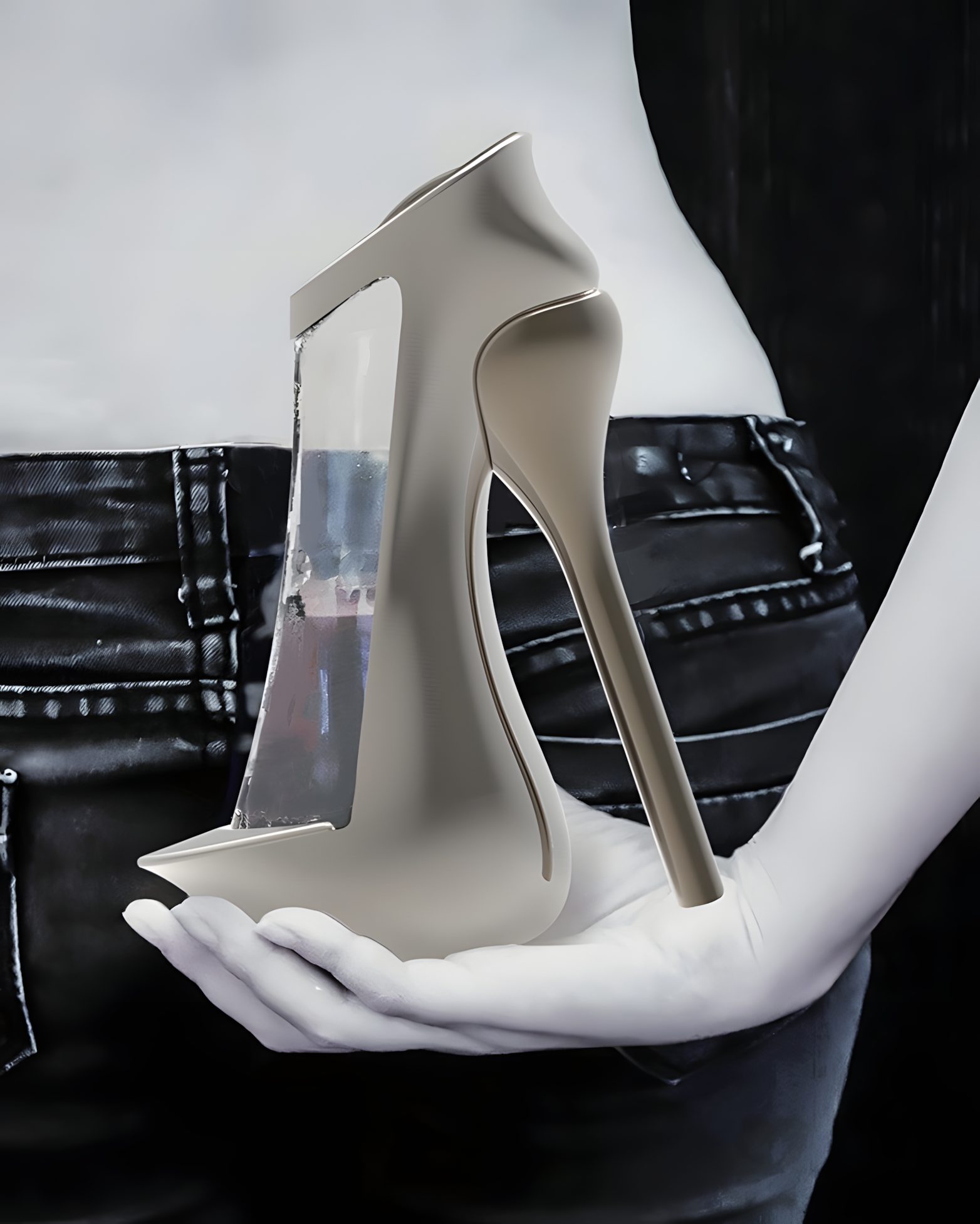
A concept for a wine decanter shaped like a high-heeled shoe, with a mechanism intended to measure each pour. The vessel controls the portion rather than relying on the server’s feel, bringing a measured serving into the ritual of pouring.這是一件以高跟鞋為外型靈感的定量醒酒器概念設計。倒酒的份量控制交給器物本身,不再依賴侍者的手感,讓優雅的倒酒儀式也能精準控制份量。
My role角色
Mechanism design, material research, and a 1:1 model.機構設計、材料研究與 1:1 模型製作。
Methods方法
A siphon and a lever make the mechanism; tin, glass and copper make the body.以虹吸與槓桿設計機構,選用錫、玻璃與銅三種材質搭配。
Outcome結果
A form and mechanism proposal, with a 1:1 PU model to test the grip and the pour.完成造型與機構提案,並以 1:1 PU 模型驗證握持與傾倒手感。
01 · Form01 · 造型
Why a high heel?可以斟酒的高跟鞋
02 · Starting point02 · 切入點
Why measure the pour?為什麼需要定量?
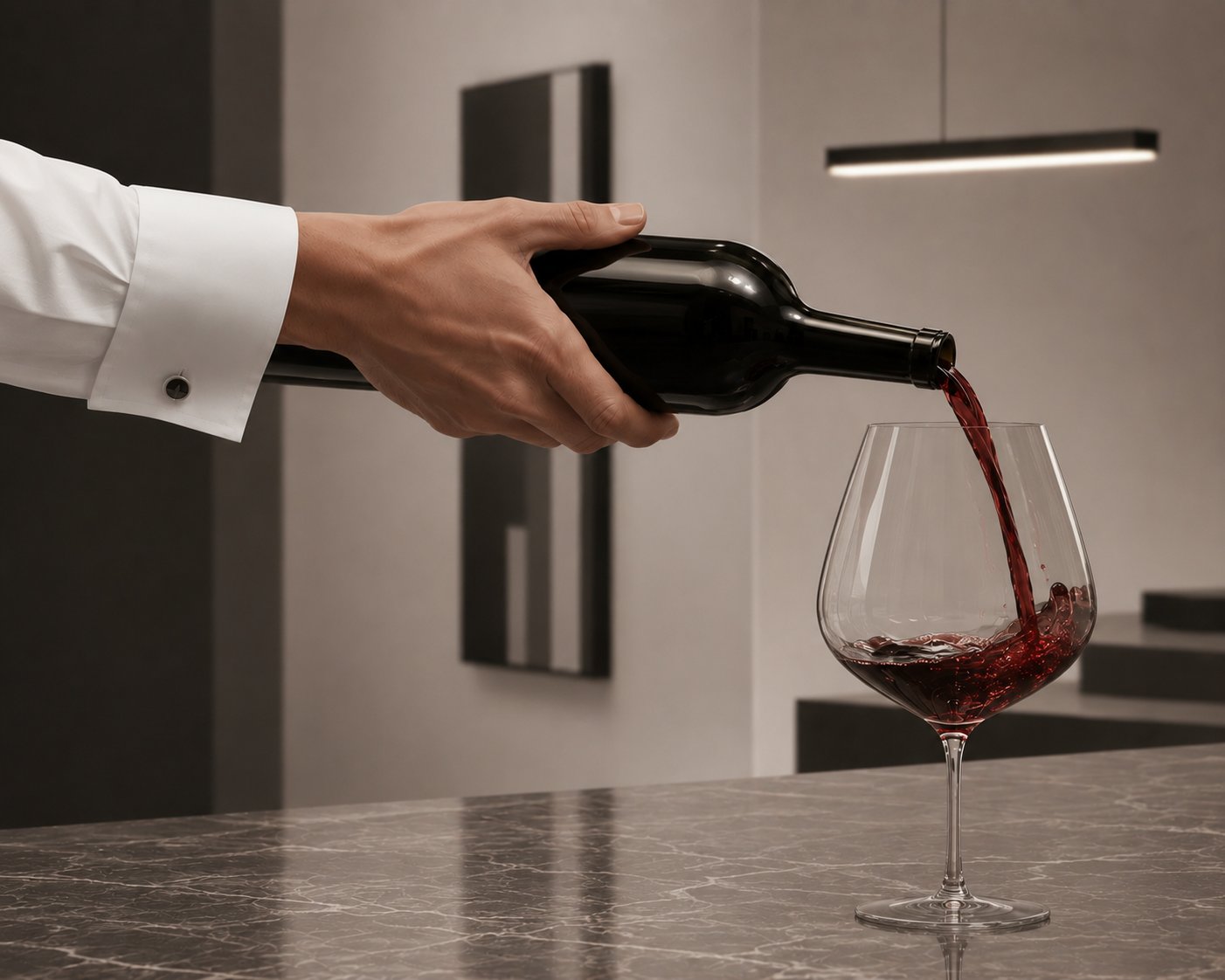
I wanted each pour to deliver the same amount, so I planned a mechanical dosing system inside the vessel. A chamber would determine the portion, reducing the need to judge it by hand.我希望每次倒出的酒量保持一致,於是在器皿內部規劃機械定量機構,把單杯份量交給腔室控制,減少對倒酒手感的依賴。
03 · Mechanism03 · 機構
Materials, linked by gravity機構與材料特性
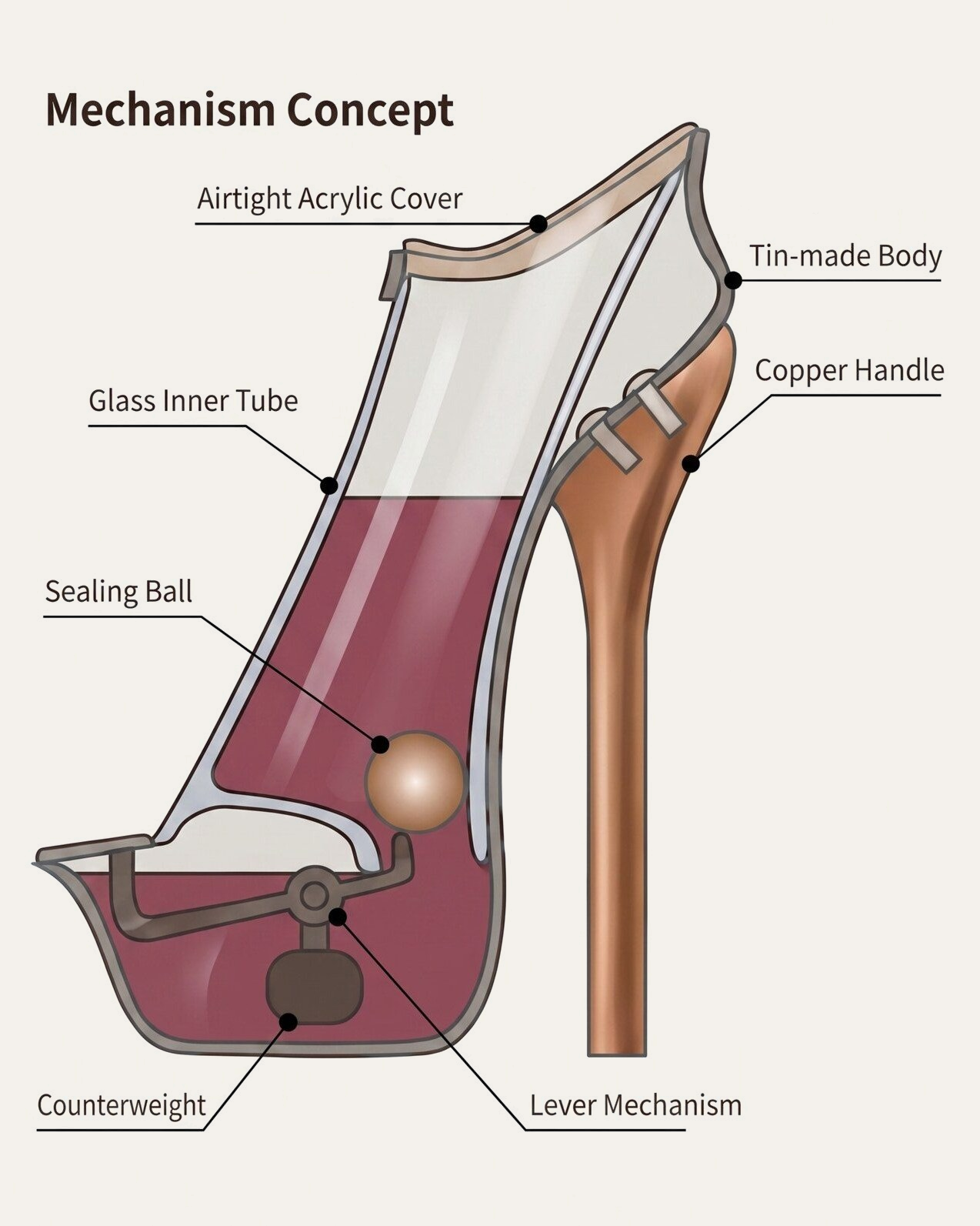
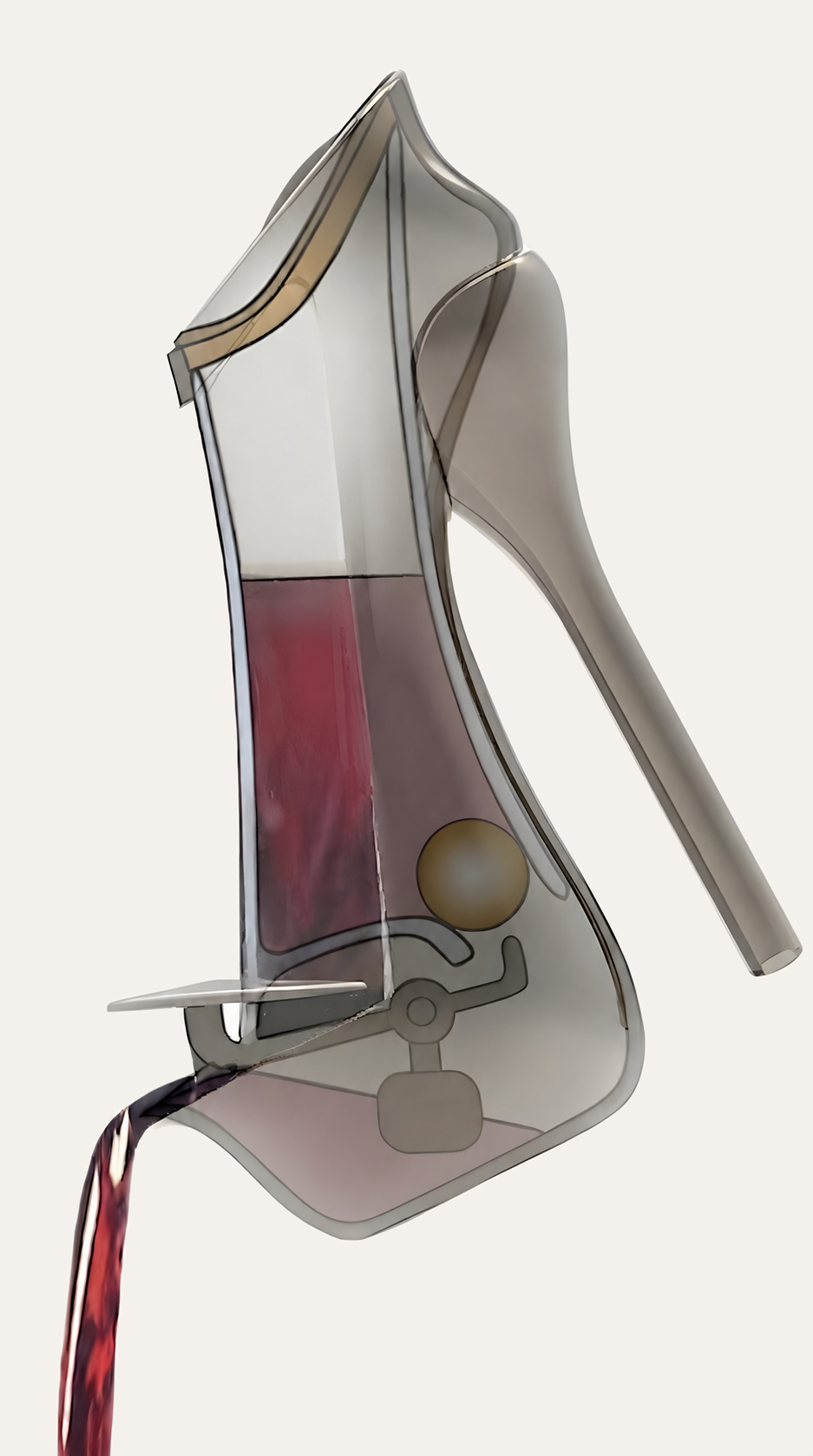
Measured pour. The glass inner tube holds the wine in a chamber inside the base. When the body tilts past a set angle, gravity pulls the weight at the bottom, and that weight drives a lever that opens the spout. At the same moment, the sealing ball rolls forward with the tilt and closes the refill channel, so each pour releases only the fixed amount already sitting in the base chamber.定量出酒:玻璃內管將酒液暫存於底台腔室。當壺身傾斜超過設定角度時,底部重錘受重力牽引,帶動槓桿開啟壺嘴。同時,隔絕球因傾斜向前滾動並封閉補酒通道,確保單次僅釋出底台腔室內的固定份量。
Refill and aeration. Set the body upright again and the lever releases, so the spout closes and the sealing ball rolls back into place. Fresh wine then runs down from the glass inner tube into the base chamber to breathe.補酒與醒酒:壺身回正後,槓桿釋放使壺嘴關閉,隔絕球隨之復位,玻璃內管中的新酒液便再次流入底台腔室進行醒酒。
Material fit. The outer shell is tin, and tin ions soften the bitterness of the tannins. The vessel inside is a glass tube, so wine that has not been poured yet never touches metal. The copper handle at the heel carries heat well, so your hand alone can tell whether the wine has cooled.材質適性:本體外殼選用錫材,利用錫離子柔化單寧苦味。內部以玻璃管作為主容器,避免未倒出的酒液與金屬反應。鞋跟處的銅質把手具備優良的導熱性,讓使用者透過手握觸感即可確認酒液是否降溫。
04 · In hand04 · 在手中
Checked against the hand為手而做的驗證
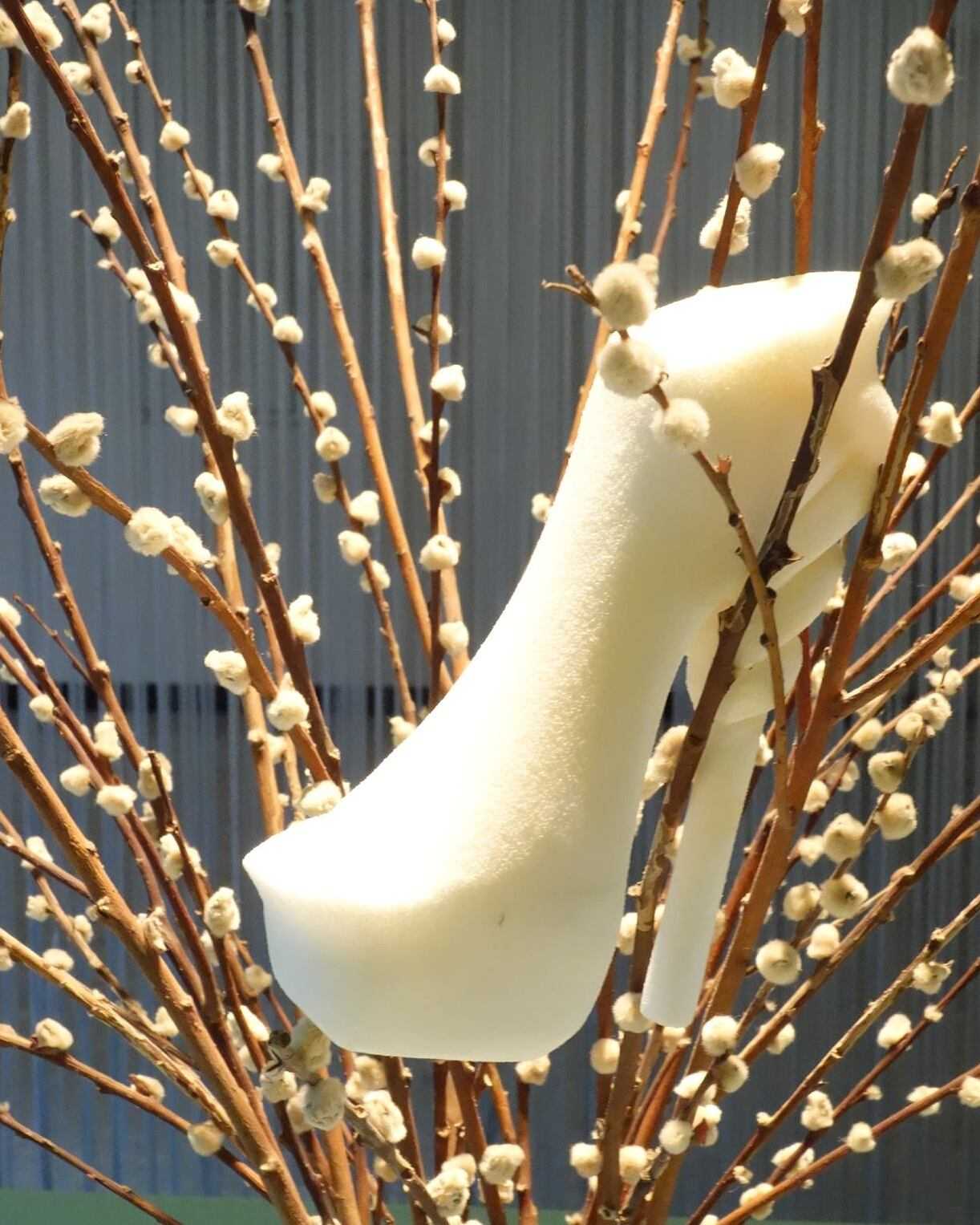
I made a full-size PU foam model to check the grip and wrist angle during pouring. It tested how the form felt in the hand; the dosing mechanism remained a proposal. For the photographs, I placed the model among dried catkins at the library, simply because I liked the atmosphere.我另外製作了 1:1 的 PU 發泡模型,檢查握持手感與傾倒時的手腕角度。這一步驗證的是造型在手中的感受;定量出酒機構仍屬提案。拍攝時把模型放在圖書館的乾燥柳絮間,單純因為喜歡那個氛圍。
05 · Reflection05 · 回顧
Designing with science將科學融入設計
This was my first attempt to develop a form around both material properties and a mechanism. Each part of the high heel took on a purpose: the platform housed the dosing chamber, the heel became a handle, and the upper extended into the vessel. Exploring how those functions could work with the silhouette was the main exercise.這是我首次把材料特性與機構原理一起納入造型發想。高跟鞋的各個部位因此有了用途:鞋台容納定量腔室,鞋跟成為把手,鞋面延伸為容器。造型與功能如何相互配合,是這件概念設計的主要練習。