Choose Ondines or Jeux d’eau, then press the play button below. Press and drag across the scene to guide the flow. Each new press switches between pushing the spirits away and drawing them closer.選擇《水妖》或《水之嬉戲》,按下曲目下方的播放按鈕。音樂響起後,可在畫面上按住並拖曳,改變光點的流向;每次重新按下,會交替推開或吸引牠們。
XTDesign · Two works · 2024 / 2026XTDesign · 兩件作品 · 2024/2026
Personal exploration個人創作
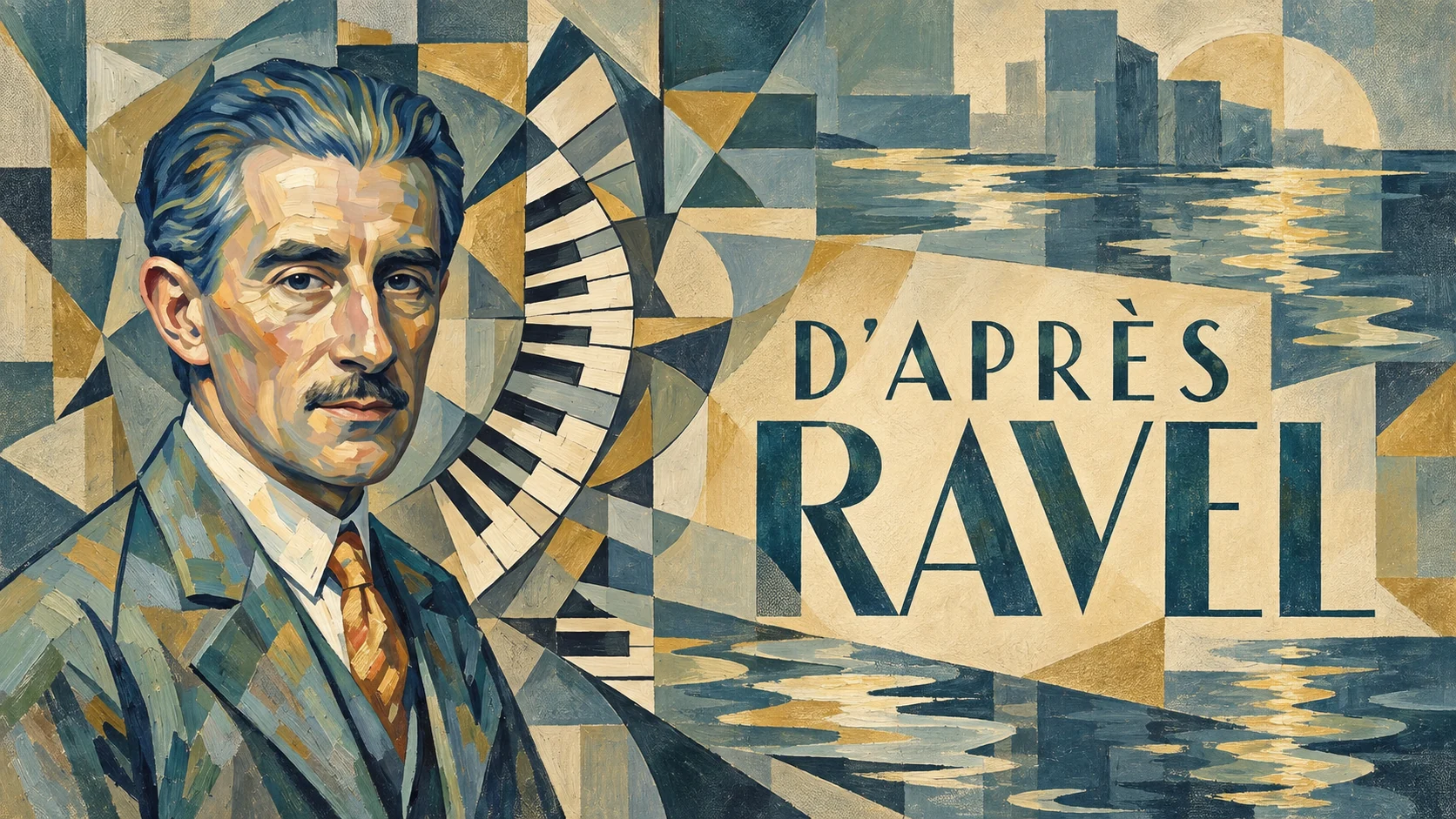
D’après Ravel 致拉威爾致拉威爾
A tribute to Maurice Ravel through two interactive works, Ondines and Jeux d’eau. As the piano rises and falls, points of light gather, circle, and drift apart, inviting the listener to reach in and play.向拉威爾致敬的兩件互動創作,《水妖》與《水之嬉戲》。循著鋼琴的起伏,我想像水中的生命如何聚散、迴旋,也為聆聽的人留下一處可以伸手共遊的水面。
My role角色
Concept, original Processing work, visual direction, and interaction design.概念發想、Processing 原作、視覺表現與互動設計。
Methods方法
Listening closely to the music, then shaping those impressions through generative visuals and AI-assisted coding.品味樂曲,透過生成式視覺與 AI 協作,將聆聽的感受化為水景。
Outcome結果
My first Codex collaboration: bringing Ondines to the web and creating Jeux d’eau.首次與 Codex 協作,移植《水妖》並創作《水之嬉戲》。
01 · Play it01 · 互動
Follow the light into the water循著光,走進水的嬉戲
Press play, then guide the light with your mouse or fingertips.按下播放,聽著音樂,用滑鼠或指尖帶動光點。
02 · Inspiration02 · 理念
An invitation into Ravel’s waters與拉威爾的水共遊
I love the way water moves through Ravel’s music, sometimes light and quick, sometimes deep and elusive. As I listen, I picture tiny creatures gathering, then swimming apart. Ondines and Jeux d’eau grew from those images. They are my way of responding to music I love and sharing the scenes it brings to mind.我喜歡拉威爾筆下的水,既有輕巧的跳動,也有幽深、難以捉摸的一面。聽著琴聲,我常會想像水裡住著一群小小的生命,忽然聚攏,又各自游開。《水妖》與《水之嬉戲》就是從這些想像發展出來的。我想用自己的方式回應喜愛的音樂,也與別人分享聆聽時浮現的畫面。
In Ondines, I left the background black so blue-green forms could emerge and fade back into the dark. Their overlapping trails suggest fleeting glimpses of life beneath the surface. Jeux d’eau opens onto a brighter pond, with fewer points of light and more room to wander. I wanted the first work to feel mysterious, and the second to feel carefree and playful.在《水妖》裡,我把背景留黑,讓青藍色的身影從暗處浮現,再隱回去。牠們游過時留下交疊的痕跡,像是偶然被看見的水中生物。《水之嬉戲》則換成明亮的池面,光點少一些,活動的空間也更開闊。我想讓前者帶點神祕,後者則輕鬆自在,像在水裡玩耍。
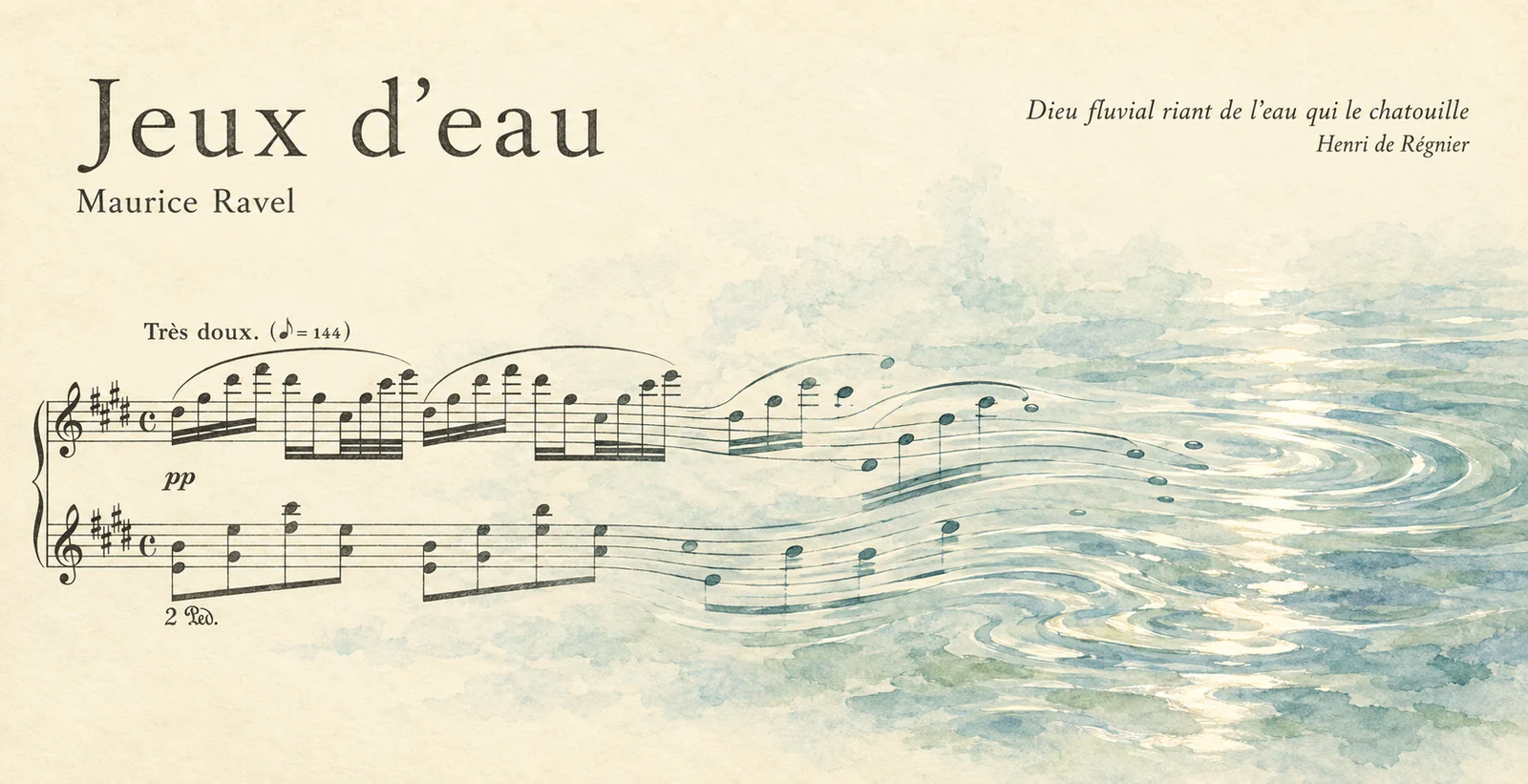
Ravel himself chose a line by Henri de Régnier for the opening page of Jeux d’eau: a river god laughing as the water tickles him. I hope visitors will stay and play for a while, following a cluster of light or waiting for it to swim past. The images I find in the music become something we can enjoy together.拉威爾本人在《水之嬉戲》的樂譜首頁引用了 Henri de Régnier 的詩句:「河神因水的搔癢而發笑。」我也希望觀者能在畫面裡玩一會兒,追著一群光點走,或停在原處,等牠們游過來。聽音樂時生出的想像,就這樣成了可以與人分享的樂趣。
03 · Making the work03 · 製作
From Processing to the browser從 Processing 到瀏覽器
In 2024, I created Ondines in Processing to turn the water scenes I imagined while listening to Ravel into an interactive work. In 2026, I worked with Codex for the first time, adapting Ondines for the browser and building on it to create Jeux d’eau.2024 年,我把聽拉威爾時浮現的水中景象做成互動作品,以 Processing 創作了《水妖》。2026 年首次與 Codex 協作,我將原作帶進瀏覽器,並延伸創作《水之嬉戲》。
Both works are rendered in Three.js. The recordings are analyzed in advance, and the browser uses that timing to guide changes in movement. Ondines responds to low-register accents by changing the forces acting on the particles; Jeux d’eau does this every four estimated beats. The particles retain their momentum as they turn, tracing continuous paths that gather and disperse with the piano.兩件作品都以 Three.js 繪製,光點隨音樂轉向。程式先分析錄音,再由瀏覽器依節奏帶動畫面,《水妖》遇到低音重音就重新配置力場;《水之嬉戲》則推估拍點,每四個拍點調整一次。換向之後,粒子仍帶著原先的慣性繼續游動,讓琴聲帶動畫面的聚散,也讓每一道軌跡自然接續下去。
- Music音樂
- Ravel, Jeux d’eau, M. 30 · Anna Sutyagina (2016). Wikimedia Commons · CC BY 3.0. Edited to 1:48 with a fade-out.Ravel《Jeux d’eau, M. 30》,Anna Sutyagina 演奏(2016)。Wikimedia Commons · CC BY 3.0。節錄 1:48,結尾淡出。
- Ravel, Ondine, from Gaspard de la nuit, M. 55 · Giorgi Latso (2022); recording credited to Asuas. Wikimedia Commons · CC BY-SA 4.0. Edited to 2:00 with a fade-out; excerpt under the same license.Ravel《Ondine》,選自《Gaspard de la nuit, M. 55》。Giorgi Latso 演奏(2022),錄音署名 Asuas。Wikimedia Commons · CC BY-SA 4.0。節錄 2:00,結尾淡出;節錄版沿用相同授權。